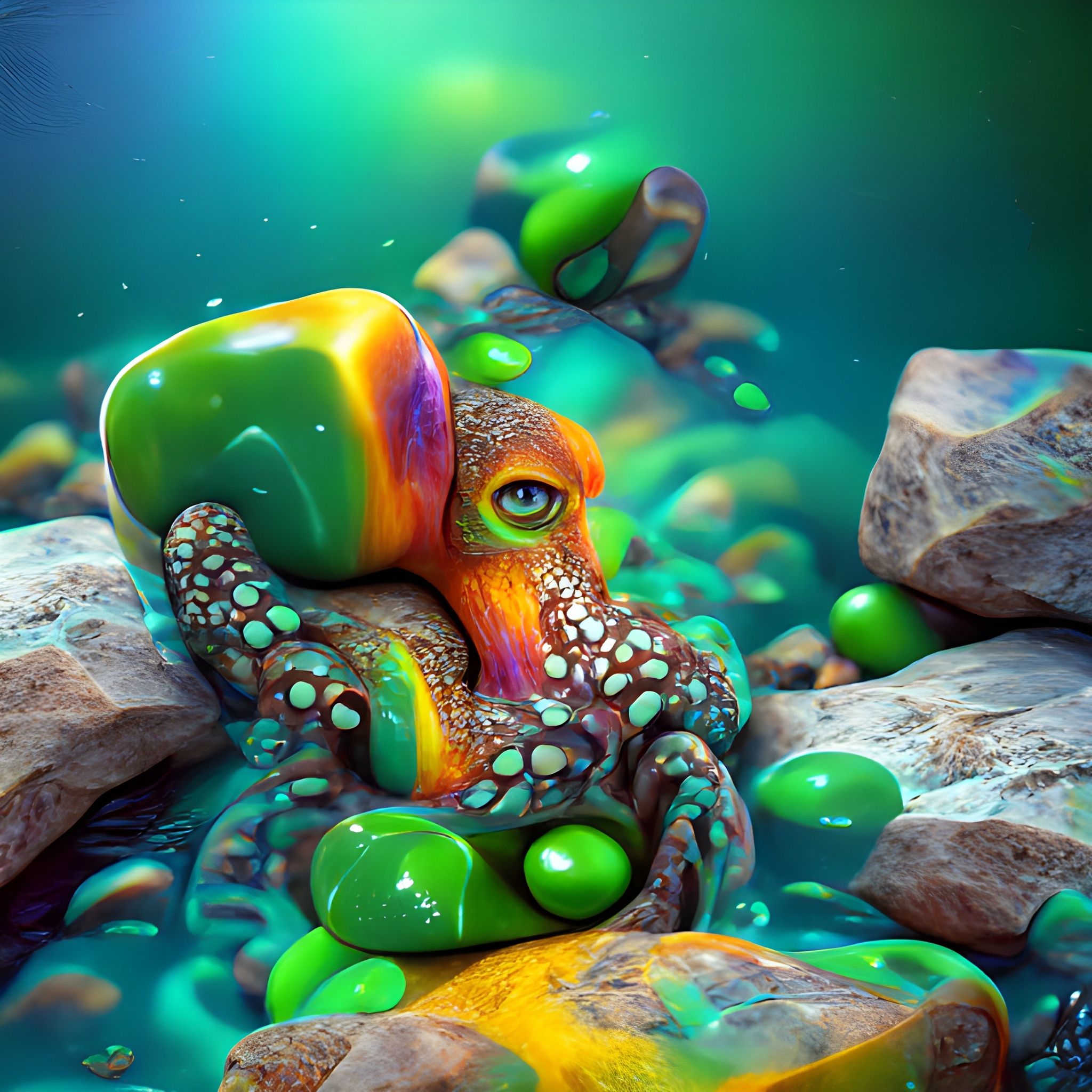
Part of Distributed Consciousness, the image connects machine learning with cephalopod intelligence and ecological interdependence.
Provenance
Created in 2021 and minted on October 30, 2021, as token 235 in the artist’s Distributed Consciousness contract on Tezos. The token record specifies a single edition and a 2048 × 2048 JPEG. The original artwork file is preserved in the main carousel image.
Exhibitions
2022 — Distributed Consciousness, DigitalFUTURES × FIU DDes Doctoral Consortium, AI Spring, Session 03. Artist presentation, October 2022; YouTube recording dated October 9. Tentacular Critter #235 appears at approximately 11:17.
2022–2023 — Not About Money: Landing Meta, Sea World Culture and Arts Center, Shenzhen, China, November 13, 2022–March 5, 2023. Presentation of the 20-minute Distributed Consciousness installation. Included here as installation history; the display of #235 at this venue has not been independently confirmed in photographs.
2023–2024 — Distributed Consciousness, ACMI, Melbourne, Australia, June 16, 2023–July 31, 2024. Solo exhibition and site-specific installation. #235 appears in the ACMI exhibition video; it is also identifiable in the artist’s eight-screen installation master, in the lower-right panel at approximately 8:12.
Installation documentation — Distributed Consciousness (2021), eight-screen installation content, version dated May 13, 2023. The carousel reproduces a frame at approximately 8:12 showing #235. This documents its inclusion in the installation video; it does not by itself establish which earlier exhibition used the same edit.
Artist-selected publication — #235 is reproduced among the representative critters on Akten’s official Distributed Consciousness: Tentacular Critters & Verse NFTs project page.
References
Memo Akten. Distributed Consciousness (2021). Project statement, technical credits, and installation documentation.
Memo Akten. Distributed Consciousness: Tentacular Critters & Verse NFTs (2021). Original release and artist-selected images.
Verse #235 — corresponding audiovisual reading and text; token 236.
Memo Akten and Katie Hofstadter. The Thinking Ocean (2026). Whitney Museum of American Art, artport commission.
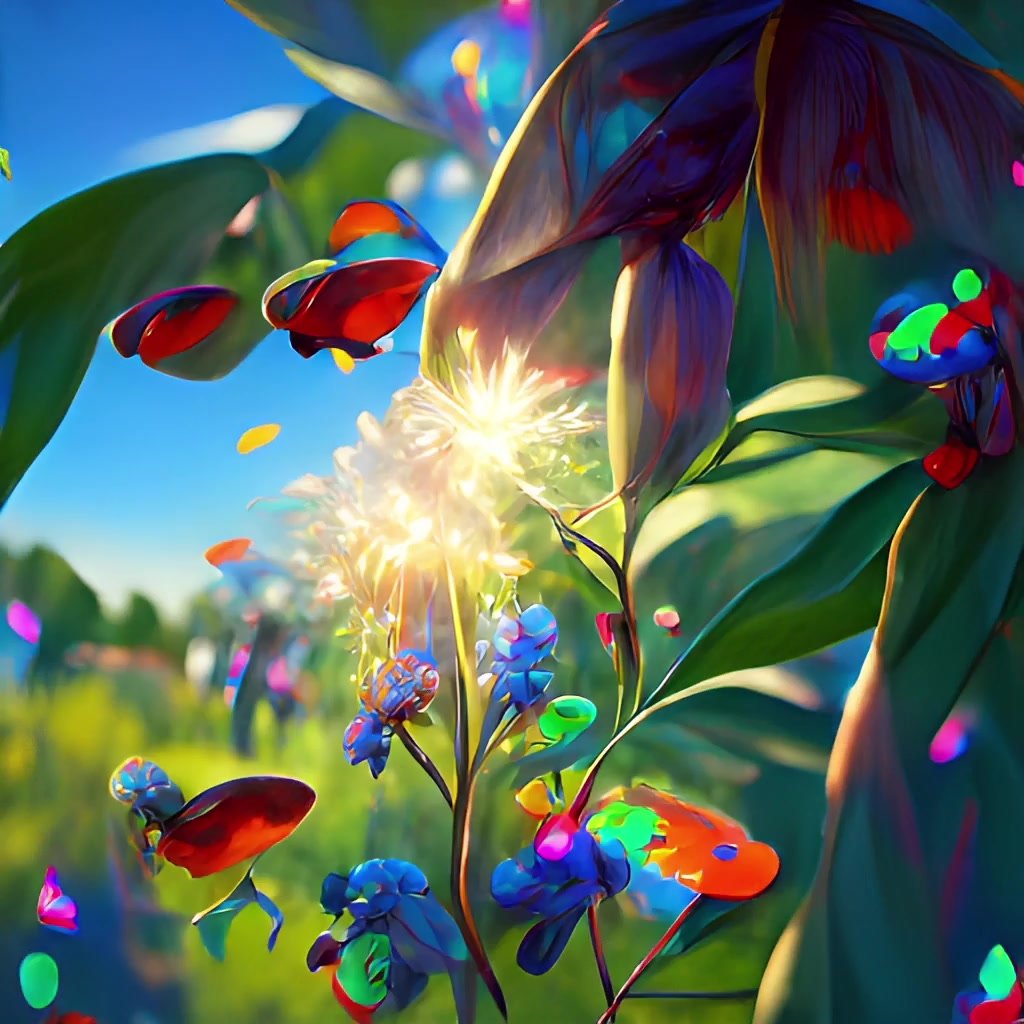
Tentacular Critter #235 belongs to Distributed Consciousness (2021), a collection of 256 unique images that subsequently developed into audiovisual works and immersive installations. The image invites an encounter with another kind of mind, while its impossible anatomy makes the mediation of machine learning conspicuous.
The work emerged during the 2021 wave of experiments connecting image synthesis with language-based machine vision. Akten credits custom software built on VQGAN, CLIP, and related open-source research. VQGAN provides a learned vocabulary of visual forms; CLIP learns relationships between images and their accompanying language. Artists could combine these systems to steer generated imagery through textual concepts, before consumer image generators became widely available in 2022. Here, the resulting instability of bodies and surfaces supports an inquiry into perception and intelligence across species.
Akten traces the project’s initial spark to snorkeling encounters with octopuses in the Mediterranean, particularly one animal’s vivid color changes close to the surface. Cephalopods offered a way to think about cognition extending through a body: their arms participate in sensing and coordinated action. The project connects that biological distribution to networks of computers and people. Its ecological concern is the belief that human beings exist separately from the living systems on which they depend. The seductive marine imagery draws viewers toward a form of life whose experience remains difficult to imagine.
Each critter also carries a verse hidden in its image data. Across the collection, these texts form a manifesto developed with GPT-2 and GPT-3 and later released as a separate collection of audiovisual readings. The matching Verse #235 concerns the collective choices that shape social connection and the need to discuss them:
Within Akten’s practice, Tentacular Critter #235 extends his use of machine learning as a means of questioning perception toward a sustained engagement with marine life and ecological relationships. That thread later becomes explicit in The Thinking Ocean (2026), made with Katie Hofstadter for the Whitney Museum’s artport. There, a changing computational ocean asks viewers to recognize agency in natural systems as well as machines. Seen in this longer trajectory, the critter’s unfamiliar gaze is an early, intimate expression of an enduring concern: how to acknowledge forms of intelligence beyond our own.