Artist · 1982–present
Mike Tyka
German
Seattle, Washington
Mike Tyka is an artist and scientist whose practice spans molecular sculpture and neural-network imagery. A coauthor of Google’s 2015 Inceptionism essay, he developed early artistic experiments with DeepDream, neural style transfer, and generative adversarial networks.
In the collection
2 works
Mike Tyka (born Hilden, Germany, 1982) is an artist and scientist working with neural networks, sculpture, and computational representations of the natural world. He studied biochemistry and biotechnology at the University of Bristol, completed a PhD in biophysics in 2007, and researched protein structure at the University of Washington in Seattle. His sculpture translates molecular coordinates into physical forms in materials including glass and bronze.
Tyka joined Google in 2012 and was based in Seattle during the development of his early neural-network art. His research there used computer vision and machine learning to map brain tissue. With Alexander Mordvintsev and Christopher Olah, he coauthored the 2015 Inceptionism essay that introduced a wide audience to images made by amplifying the features a trained network detects. This work helped establish machine vision itself as a source of artistic imagery.
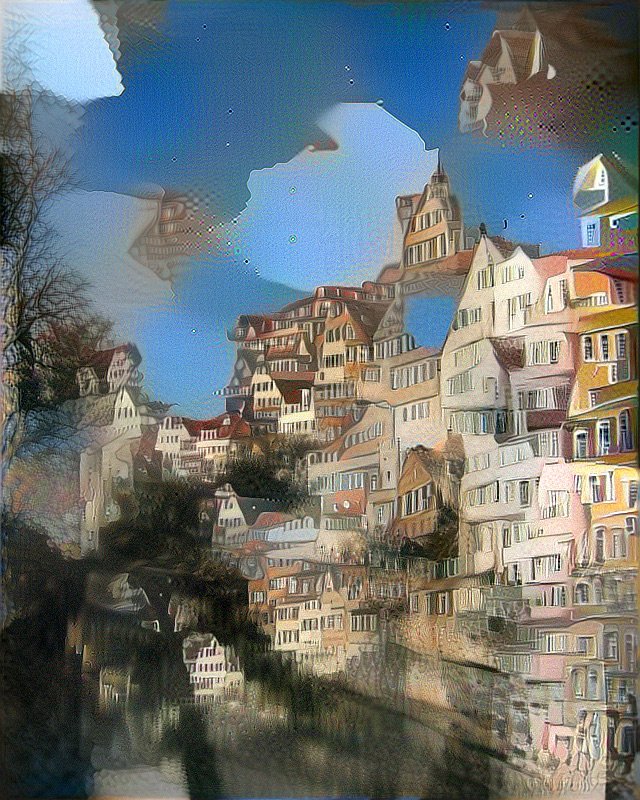
Tyka’s subsequent experiments tested what neural representations retain and what they discard. His investigations of neural style transfer included iterative changes of style, localized texture synthesis, and reconstruction without a content constraint. Tübingen reconstructed from Tübingen (2016) belongs to this period: recognizable architecture returns in a composition whose spatial logic has become unstable.
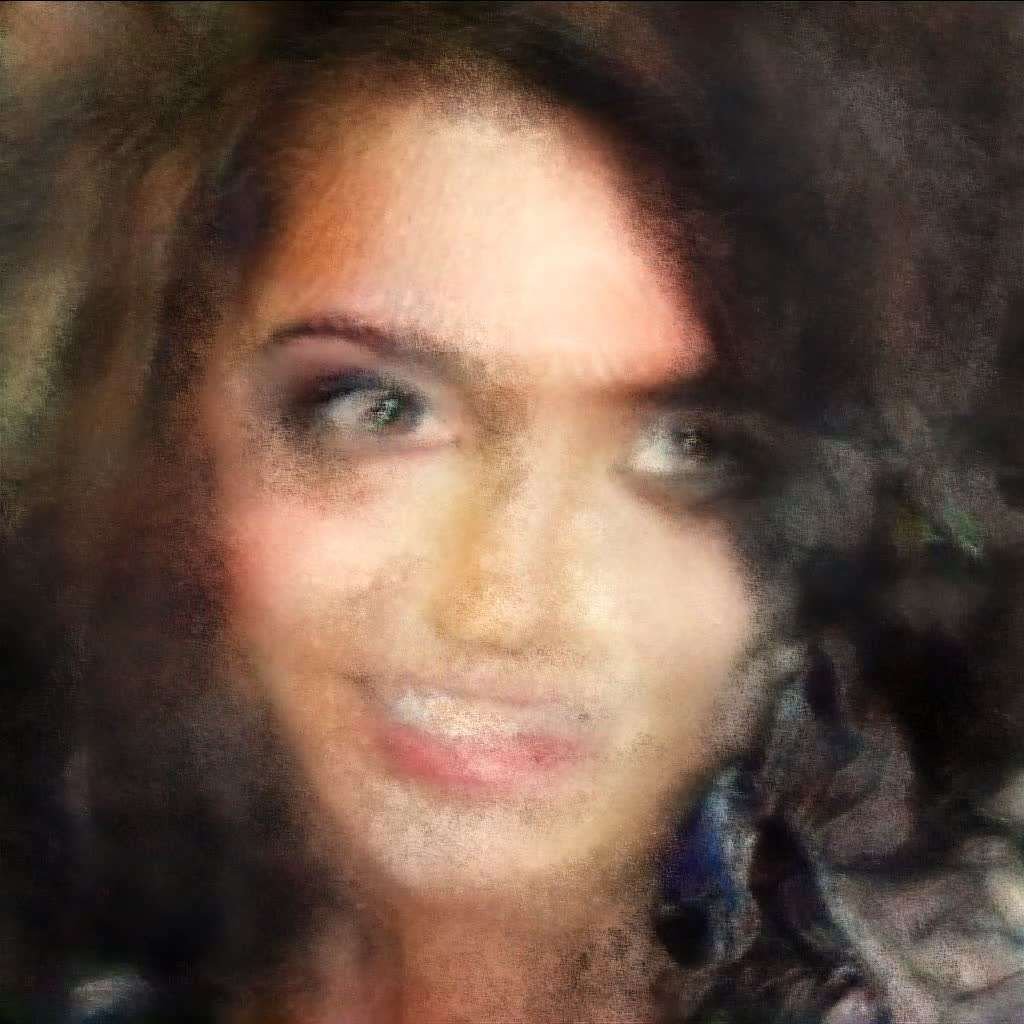
His later work includes Portraits of Imaginary People, using generative adversarial networks, and a collaboration with Refik Anadol on Archive Dreaming (2017). Across these projects, Tyka’s practice connects the construction of images with the scientific study of systems whose internal organization is difficult to see directly.
In the library