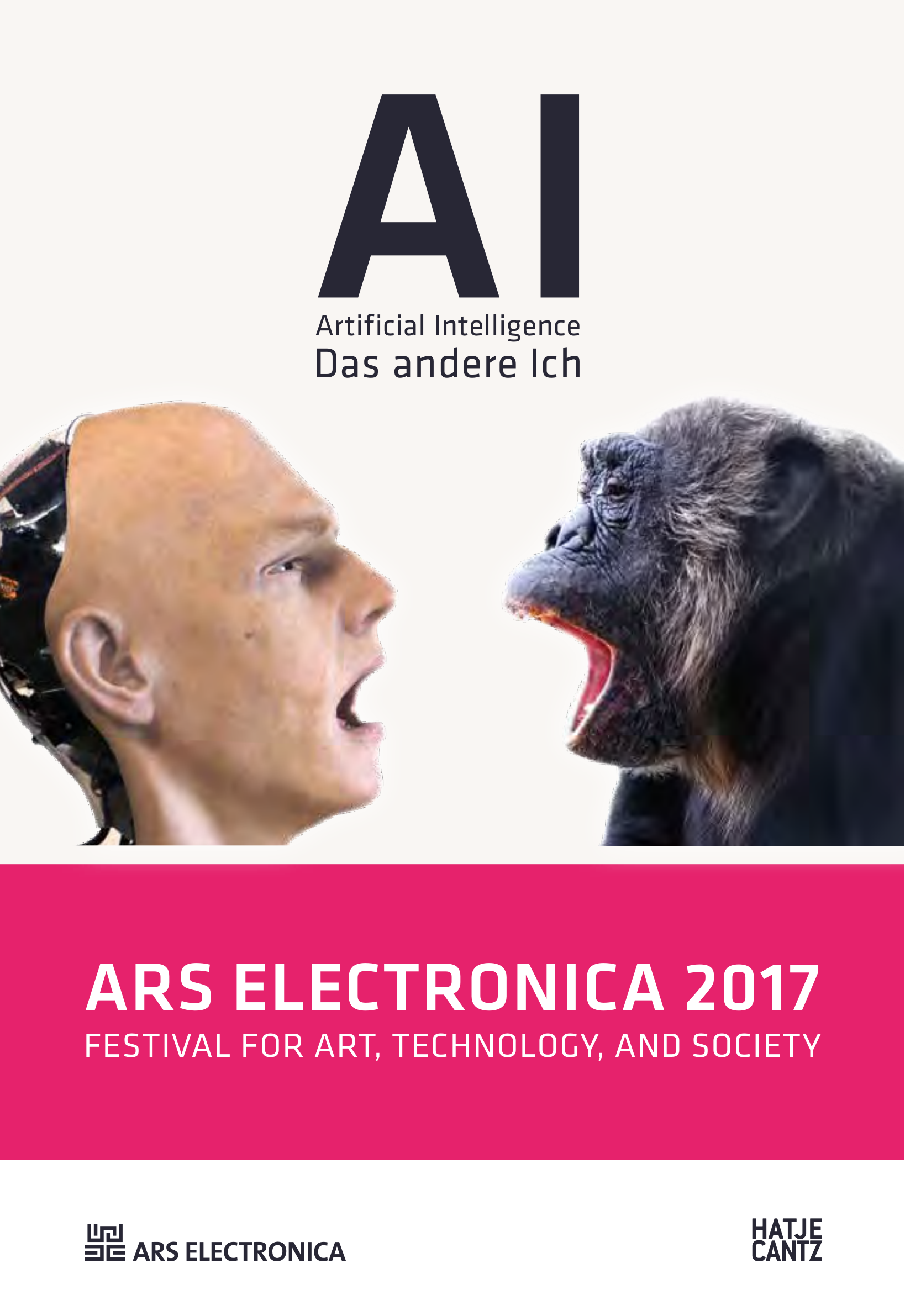
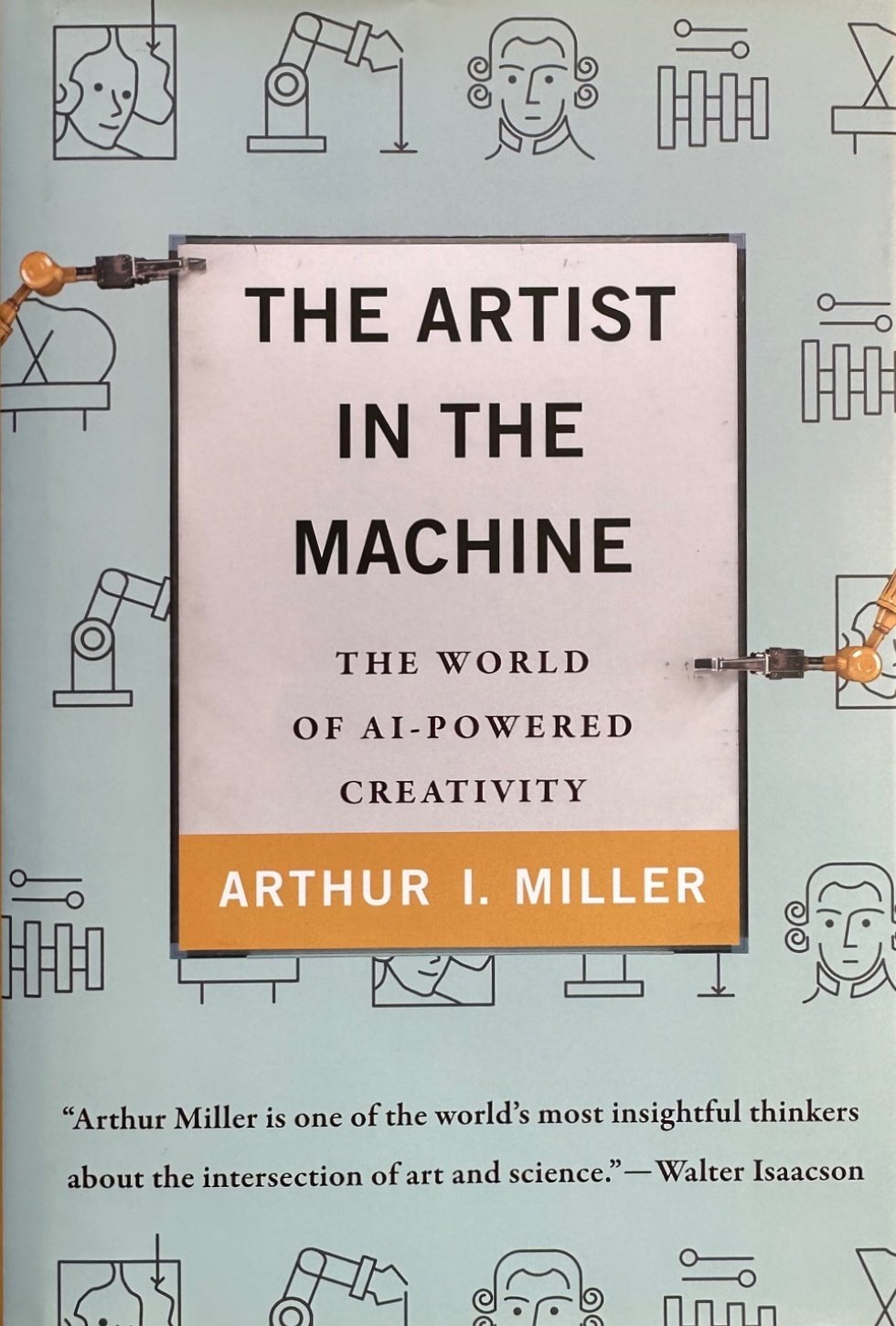
01 / 07Front cover of the 2017 Ars Electronica festival catalogue.
Exhibition catalogue
Ars Electronica 2017: AI – Artificial Intelligence / Das andere Ich
2017At its 2017 festival in Linz, Ars Electronica made artificial intelligence the central theme, bringing early experiments with deep learning to an international media-art audience.
- Author / editor
- Gerfried Stocker, Christine Schöpf, and Hannes Leopoldseder, editors
- Publisher
- Hatje Cantz
Berlin - Format
- Illustrated softcover festival catalogue
- Pages
- 400
- Language
- English
PDF document
Complete festival catalogueEnglish · 12 MB
Official Ars Electronica PDF in the original spread layout.
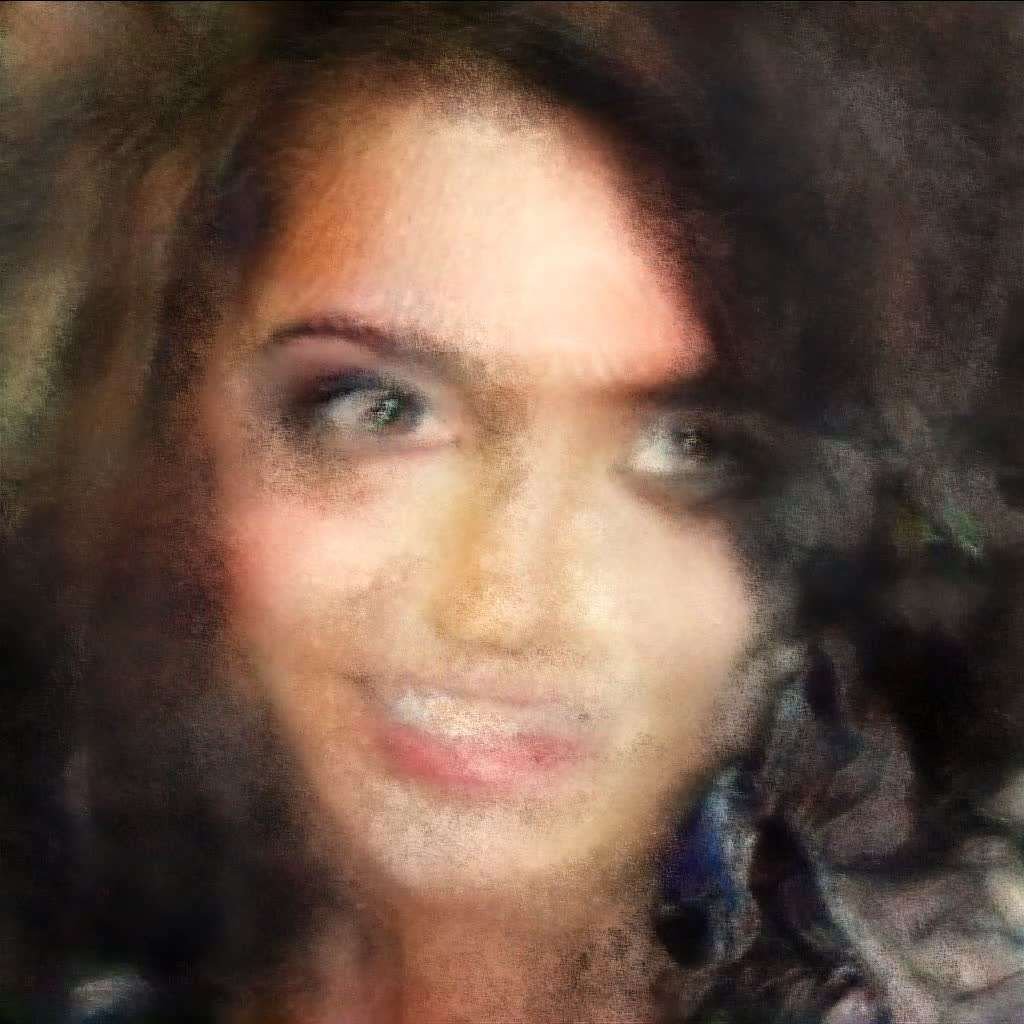
Ars Electronica had been exhibiting electronic art in Linz since 1979. For five days in September 2017, it devoted its festival to a question that artists and computer scientists were beginning to approach from different directions. What does it mean for a machine to see? More than 100,000 visits were recorded across the festival for the first time. Two years later, the Ars Electronica Center made Understanding AI a central exhibition of its museum.
The artists gave that question different meanings. Refik Anadol turned a year of wind measurements from Linz Airport into moving images in Wind of Linz: Data Paintings (p. 42). For Archive Dreaming, he used machine learning to find connections among 1.7 million documents in the SALT Research archive and projected them around the viewer (p. 66). In Learning to See: Hello, World!, Memo Akten turned a camera on himself and let viewers watch a neural network learn his face (p. 67). Mario Klingemann’s X Degrees of Separation used visual resemblances to trace unexpected paths between museum objects (p. 76). In Portraits of Imaginary People, Mike Tyka trained a network on photographs of real faces to produce portraits of people who had never existed (p. 82). The collection’s paolakinck belongs to this series. The Deep Space 8K program Experimental, curated by Jürgen Hagler, lists Casey Reas among the participating artists and reproduces an image credited to him (p. 339).