

Printed matter
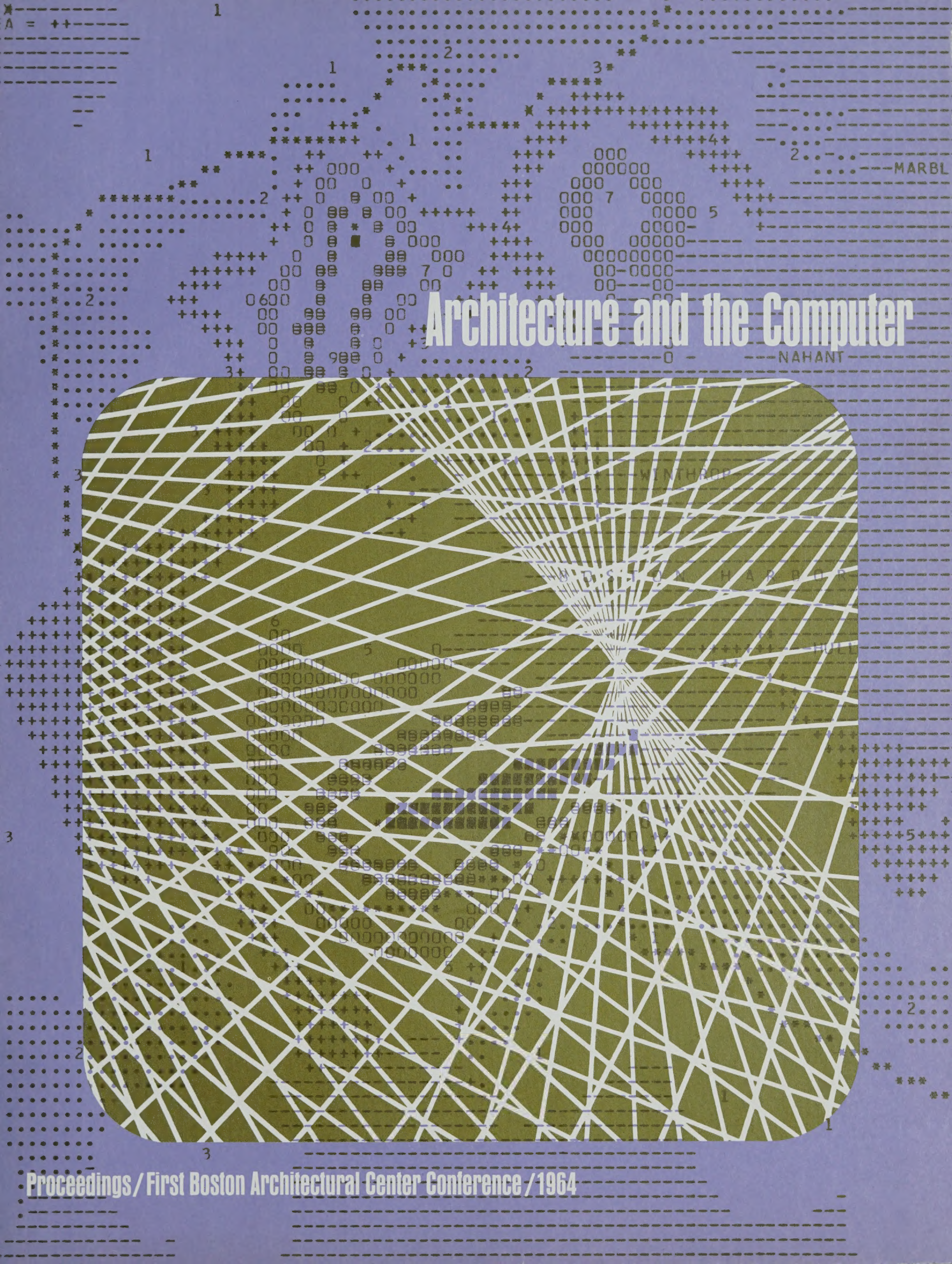
Architecture and the Computer
1964Proceedings of the first Boston Architectural Center conference on the use and implications of computers in architecture, engineering and design. The contributions range from structural calculation, environmental modelling and statistical mapping to interactive planning, computer graphics and debates about creativity.
- Author / editor
- Boston Architectural Center
- Publisher
- Boston Architectural Center
Boston, USA - Format
- Conference proceedings
- Pages
- 58
- Language
- English
PDF document
Full text6.9 MB
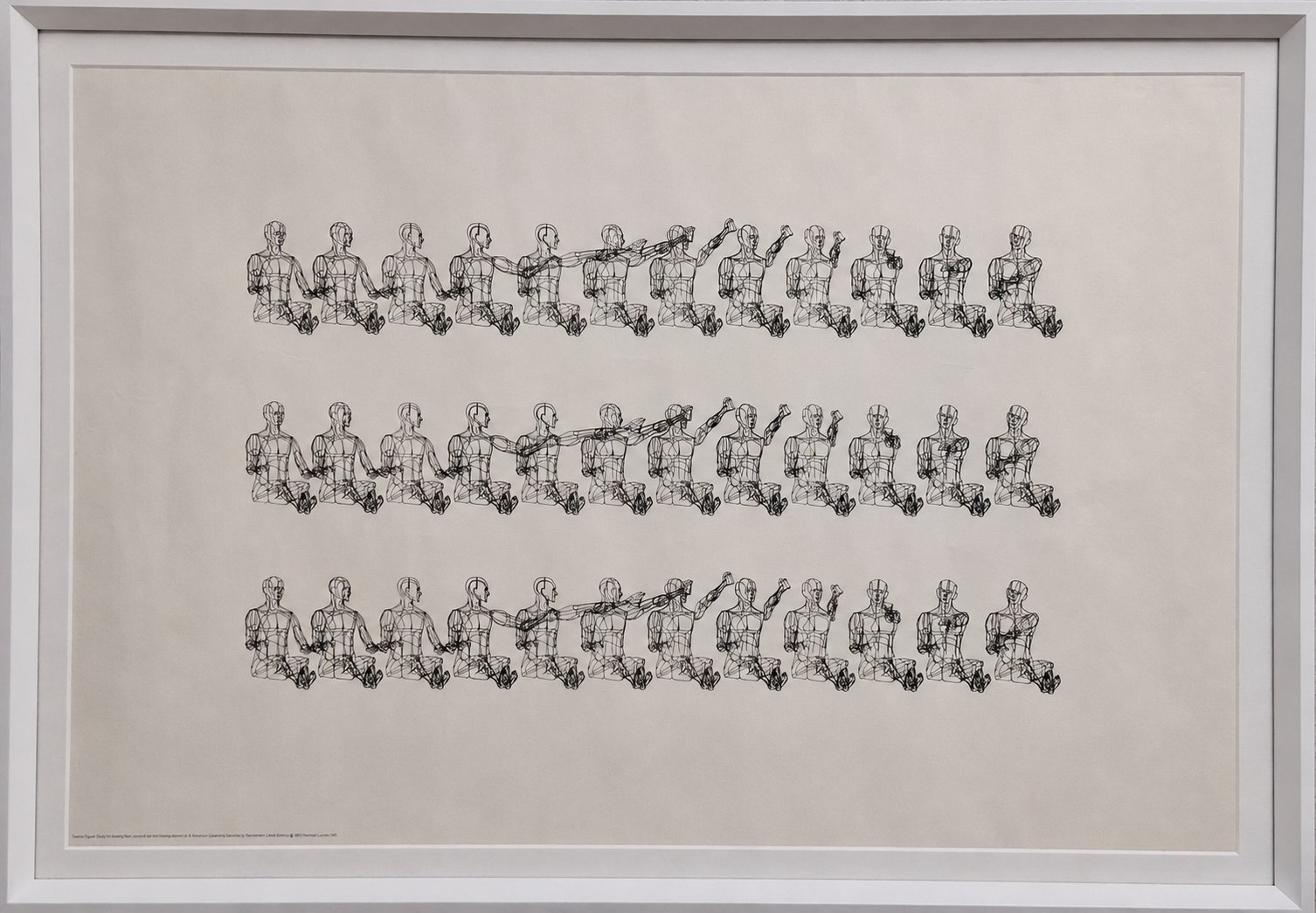
“The name of our organization is Computer Graphics, and the whole purpose is to make data understandable to the human eye, and to do this with all the speed and economy that we can muster from a computer. The first true perspective drawing that we did was in 1960 and I'd like to show you the process we go through using available equipment within Boeing.” - W.A. Fetter
William A. Fetter’s “Computer Graphics” (pp. 34–36) provides a contemporaneous account of Boeing’s graphics operation. Fetter states that Boeing produced its first true computer-generated perspective drawing in 1960 and describes a production system involving an IBM 7094, punched cards, magnetic tape and an SC-4020 microfilm recorder. Its applications included aircraft visualization, three-dimensional graphs, radar studies, cockpit visibility and animated simulations.
Neither the article nor its illustrations show or describe the articulated human figure later known as Boeing Man. The publication therefore substantiates Boeing’s three-dimensional computer-graphics work by 1960, but not the frequently repeated claim that the mature human model was publicly presented in 1964.
Reference:
Boston Architectural Center. Architecture and the Computer: Proceedings of the First Boston Architectural Center Conference, December 5, 1964, Boston, Massachusetts. Boston: Boston Architectural Center, 1964. Internet Archive.