
Artist · 1928–2002
William Fetter
American
Wichita, Kansas, USA · Seattle, USA
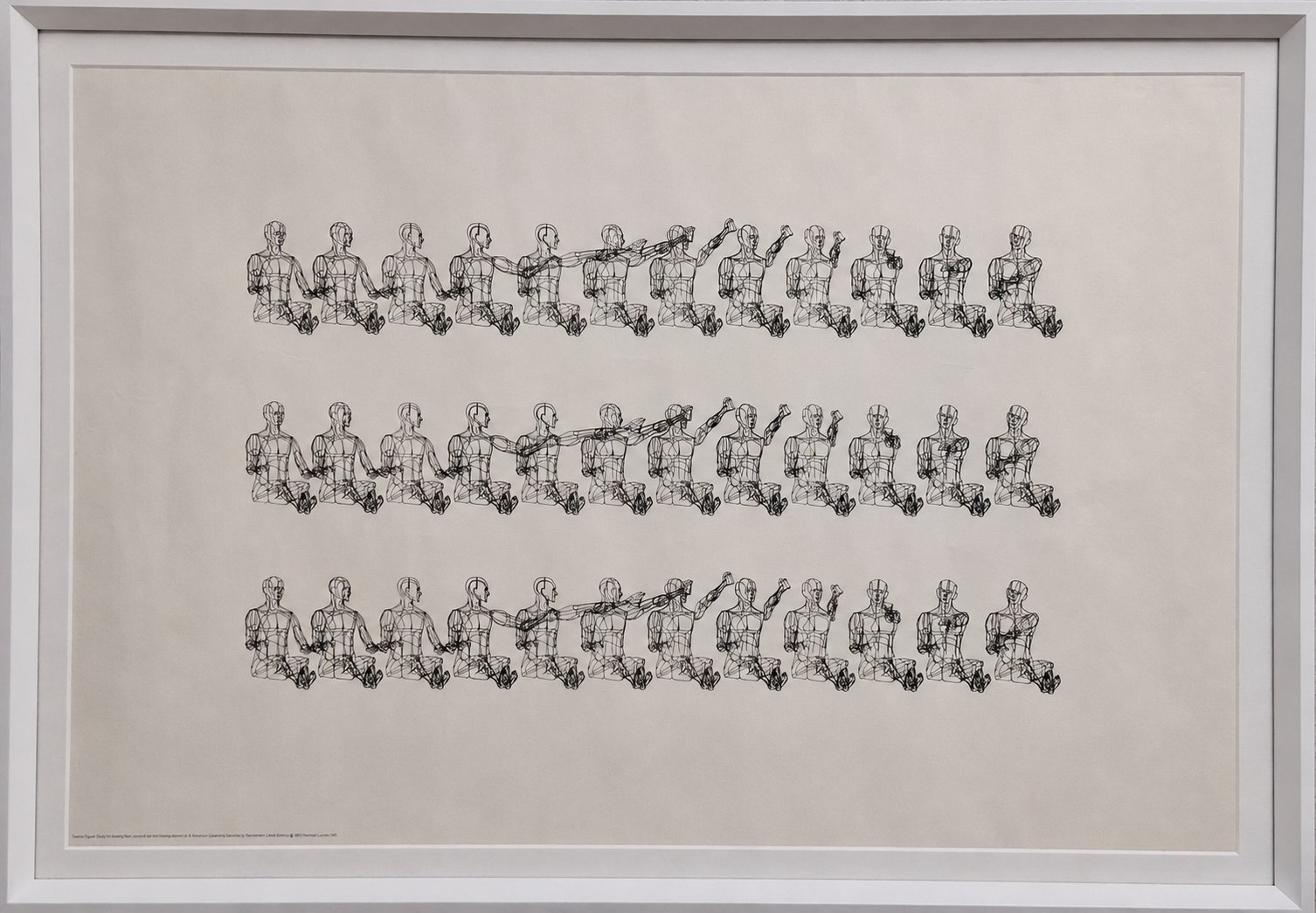
William Fetter (1928–2002) was an American designer who coined the term “computer graphics” circa 1960. At Boeing, he directed a program that produced three-dimensional perspective drawings beginning around 1960. Under his guidance, Boeing developed Human Figure, traditionally dated 1964 and first securely documented in its mature form in 1966. Widely regarded as the first articulated, anthropometrically based 3D computer model of the human body, it became a foundational image in the histories of computer graphics, animation, CAD and virtual human modeling.
William Fetter (1928–2002) was one of the founders of modern computer graphics. While working at Boeing, he coined the term “computer graphics” in 1960 to describe the emerging practice of using computers to calculate and produce visual images. He created Human Figure, better known as Boeing Man or First Man: the first three-dimensional computer model of the human body.
Fetter came to computing through graphic design rather than computer science. Born in Independence, Missouri, he studied graphic design at the University of Illinois, graduating in 1952. After working in publishing and magazine design, he joined Boeing in Wichita in 1959, where he began investigating how computers could replace laborious manual perspective drawings with mathematically calculated views of aircraft and their interiors. Boeing established a formal research program around the work in 1960, with Fetter managing the project; he moved with the program to Seattle in 1963.
From this research emerged Fetter’s defining achievement. Human Figure, also known as First Man or Boeing Man, is traditionally dated 1964, although its mature form is first securely documented in published sources from 1966. Created to study how pilots interacted with aircraft cockpits, it was a mathematically defined, articulated digital human based on U.S. Air Force anthropometric data. Instead of depicting a person from one fixed viewpoint, the system stored a three-dimensional model whose pose and projected appearance could be recalculated by the computer. It could therefore be used to study reach, visibility, seating position, instrument placement and cockpit ergonomics before the physical environment existed.
Known as Human Figure, First Man, or Boeing Man, the model established the idea of the human body as a manipulable object within computational space. Its skeletal wireframe form became one of the defining images of early computer graphics and anticipated technologies fundamental to computer animation, computer-aided design, ergonomic simulation, video games, virtual reality, and contemporary digital humans.
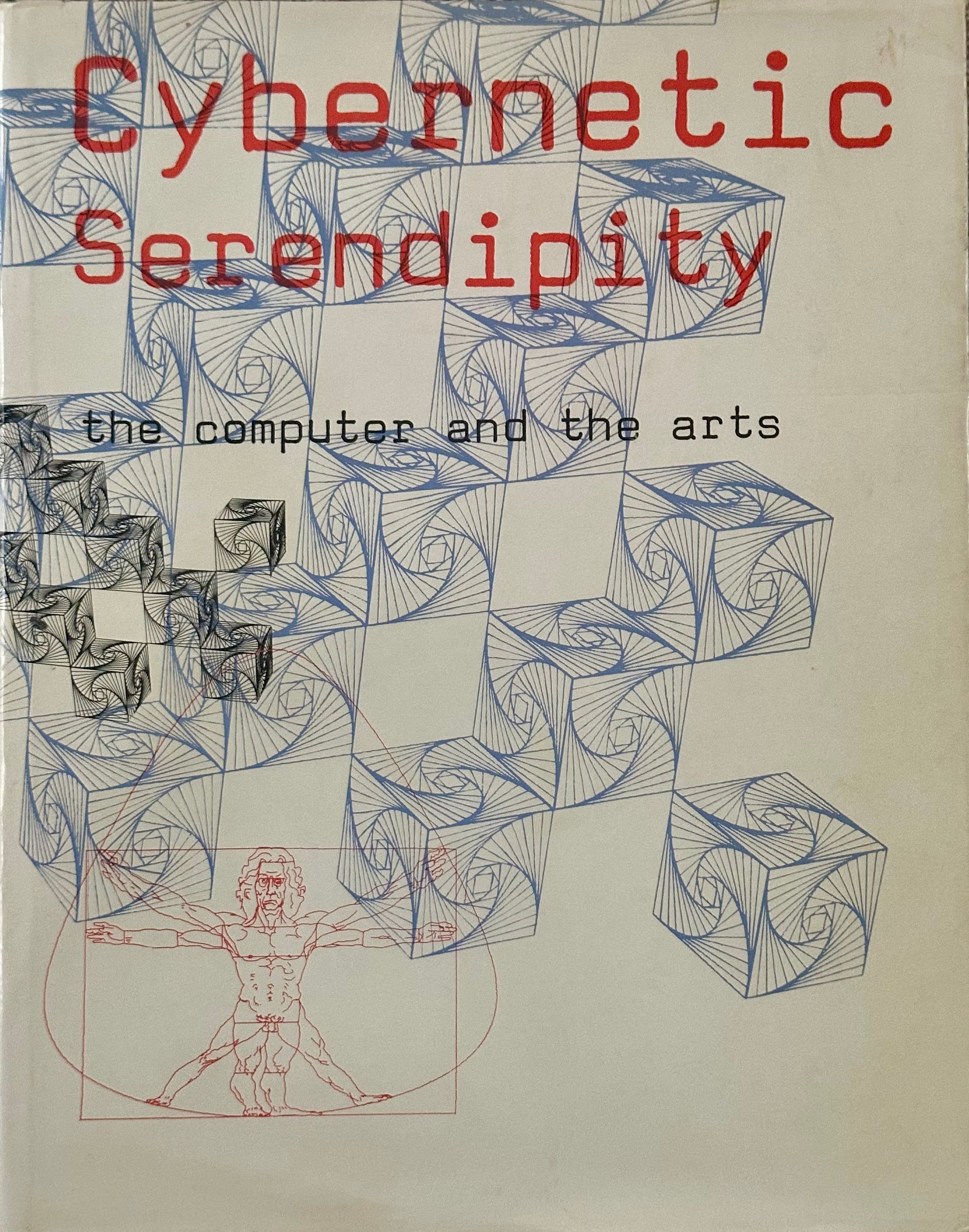
Fetter's work soon crossed from aerospace engineering into art. His computer-generated human figures were shown in Cybernetic Serendipity: The Computer and the Arts at London's Institute of Contemporary Arts in 1968, the landmark exhibition that brought artists, engineers, mathematicians, composers, and scientists together around computers and cybernetics. Motif Editions selected Human Figure for the seven-print portfolio published in connection with the exhibition, alongside works by Computer Technique Group, Charles Csuri and James Shaffer, Maughan S. Mason, Donald K. Robbins, and Kerry Strand.
Fetter was also active in the emerging art-and-technology movement. In 1968 he helped establish the Pacific Northwest chapter of Experiments in Art and Technology, connecting artists with Boeing engineers and computing resources. After leaving Boeing, he produced computer-generated imagery for a 1969 Norelco television commercial—described as the first use of computer-generated imagery in a nationally televised commercial—and joined the Design Department at Southern Illinois University in 1970, later serving as its chair.
Fetter’s importance rests on two unusually fundamental contributions: helping to define computer graphics as a field and directing the creation of its first articulated, anthropometrically based three-dimensional human model.
Exhibitions
1968 - Cybernetic Serendipity: The Computer and the Arts Institute of Contemporary Arts, London, August 2 - October 20, 1968. Fetter's Human Figure computer graphics were exhibited, and a version was published in the accompanying Motif Editions portfolio. The ICA describes Cybernetic Serendipity as the first international exhibition in the UK devoted to the relationship between art and new technology.
1969 - Cybernetic Serendipity Corcoran Gallery of Art, Washington, D.C., July 16 - August 31, 1969. Touring presentation of the ICA exhibition.
1969 - Cybernetic Serendipity Exploratorium, San Francisco, November 1 - December 18, 1969. Final U.S. presentation of the touring exhibition.
1969 - Tendencies 4: Computers and Visual Research Zagreb. Fetter's computer graphics were represented in this major international exhibition and research program devoted to computing and visual culture.
In the collection
1 work
In the library
7 items