

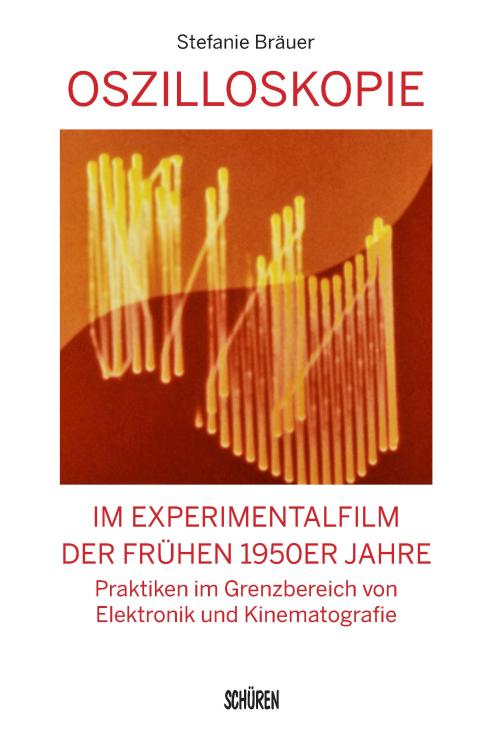
01 / 04Front cover of Stefanie Bräuer, Oszilloskopie im Experimentalfilm der frühen 1950er Jahre: Praktiken im Grenzbereich von Elektronik und Kinematografie, Schüren Verlag, 2024. The cover features a still from Mary Ellen Bute’s Abstronic, 1954–55.
Open full-size image ↗Printed matter
Oszilloskopie im Experimentalfilm der frühen 1950er Jahre
2024This German doctoral thesis titled "Oscilloscopy in Experimental Film of the Early 1950s" is the most substantial recent specialist study of Bute, Hirsh and McLaren as a coherent corpus of early oscillographic filmmaking.
- Author / editor
- Stefanie Bräuer
- Publisher
- Schüren Verlag
Marburg, Germany - Format
- Pages
- 494
- Language
- German
PDF document
Full textGerman · 25 MB
Related in the collection
![Hy Hirsh, Untitled [Color Abstraction], circa 1950: turquoise loops, a blue disk, magenta bands and a white diagonal waveform against black.](https://cdn.sanity.io/images/0diin6kb/production/430d24c5338fbcb22ac4285797381a40897073f9-579x730.jpg)
Hy Hirsh, c. 1950
![Hy Hirsh, Untitled [Color Abstraction], circa 1950: pale pink rounded forms crossed by red bands above undulating blue-violet waves on a dark field.](https://cdn.sanity.io/images/0diin6kb/production/84342189be6e0cd314b21d123858274de908fe0b-2275x1805.jpg)
Hy Hirsh, c. 1950
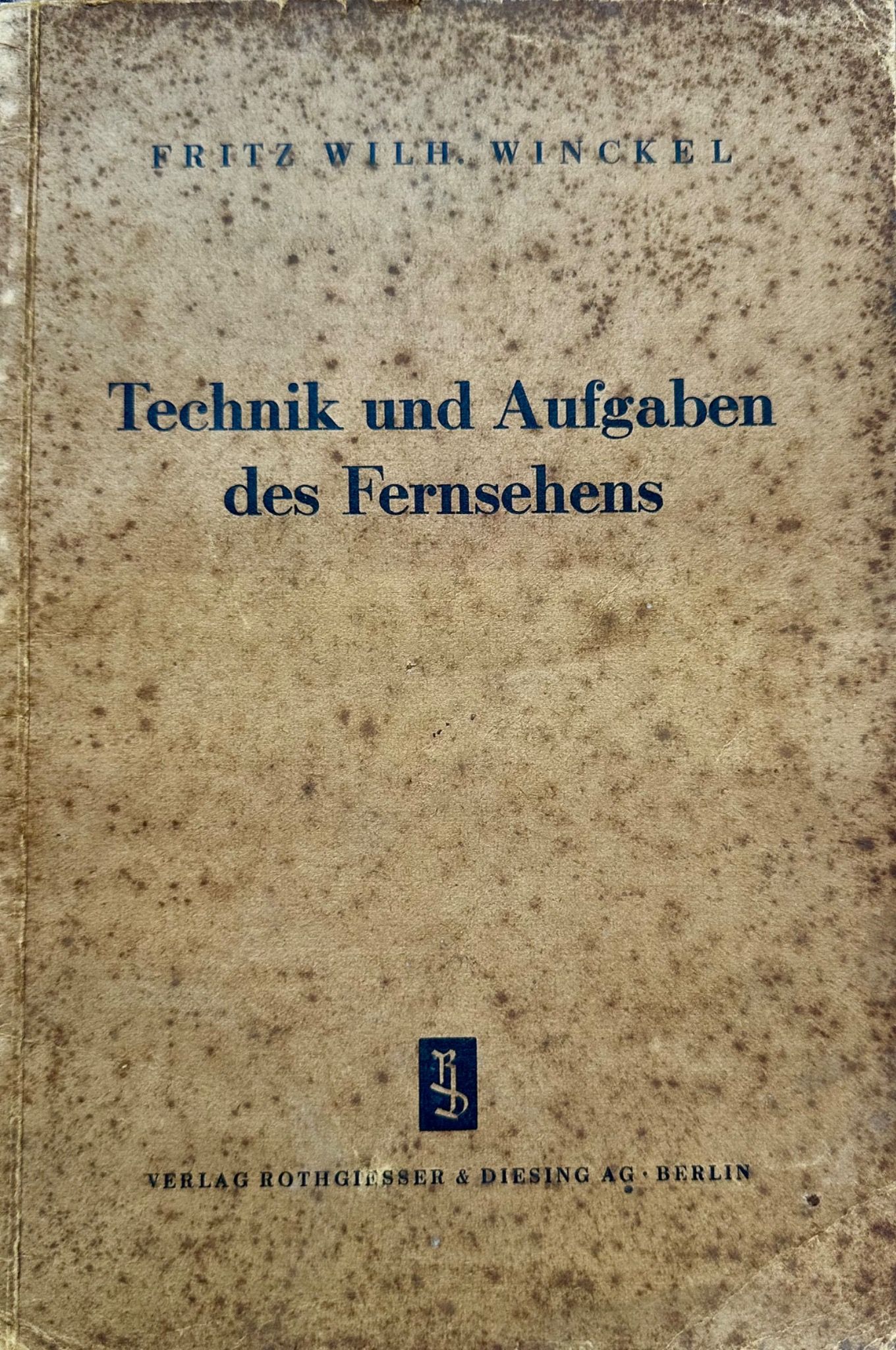
Fritz Wilhelm Winckel, 1930
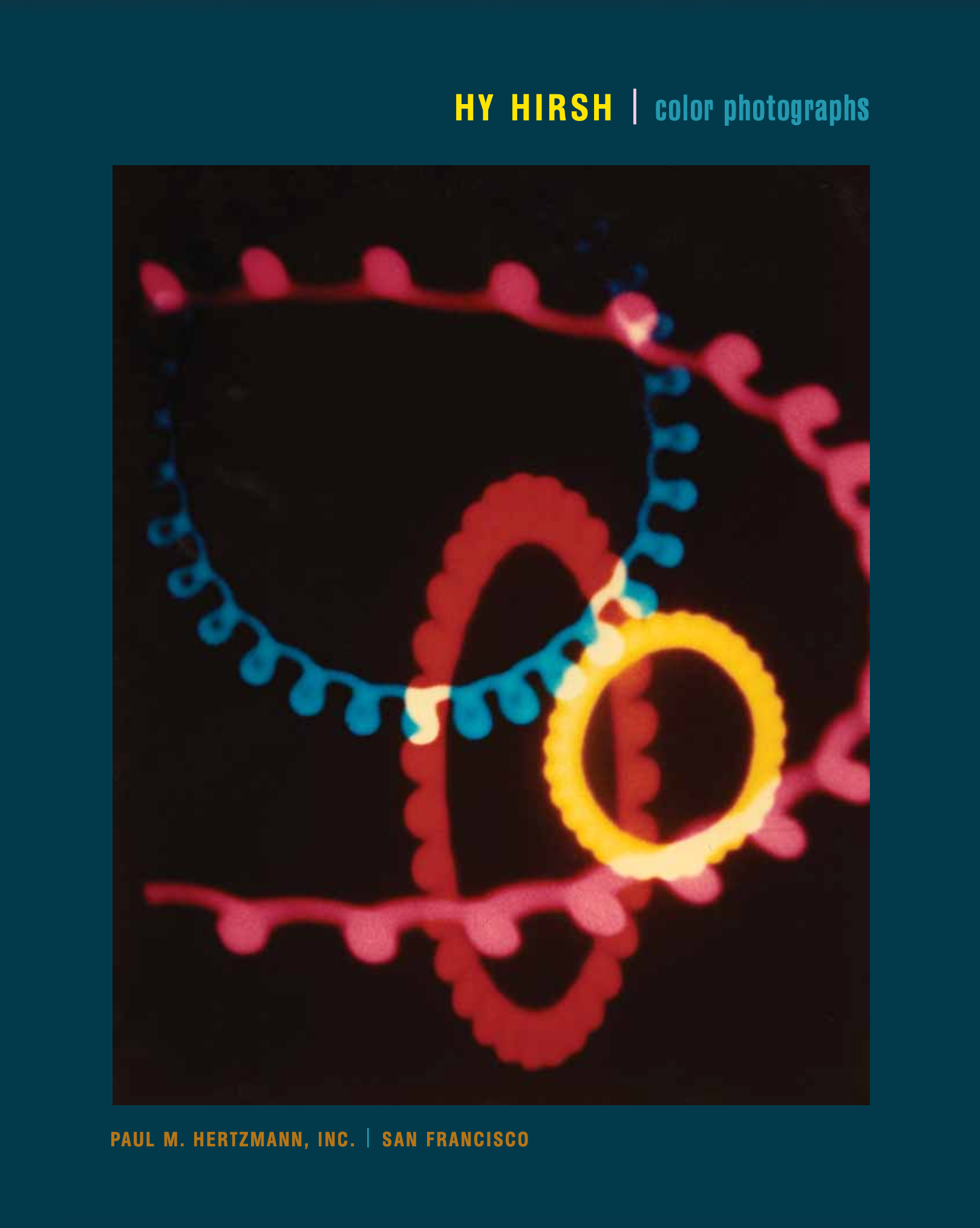
Paul M. Hertzmann, 2008
Margit Rosen, 2024
Abstract
In the early 1950s, experimental films emerged that artistically incorporated electronic images for the first time. This doctoral dissertation compiles these works as a corpus for the first time, examining the integration of electronic oscillograms into the animated films of Mary Ellen Bute (1906–1983), Hy Hirsh (1911–1961), and Norman McLaren (1914–1987) between 1951 and 1954, with a focus on the intersection of electronics and cinematography.
The author investigates the practices employed and the relational network involved in the production of the films: their creation involved not only human actors, but also apparatuses and technical procedures. To adequately describe this human-technology relational structure, the study transfers the affordance approach into a history-of-science-oriented media and film studies framework. It questions what modes of operation the oscilloscope enabled based on its conventional contexts of use, technical parameters, and interface design, and how it was appropriated for experimental filmmaking.
Furthermore, by examining this critical juncture in the history of technology and film in the early 1950s, the study challenges the conventional periodization that locates the electronic arts from the 1960s onward. This expansion of the history of electronic moving images is developed with a perspective toward the ever-increasing significance of digital-numerical media and electronic arts.