Artist · 1939–present
Hans Dehlinger
German
Kassel, Germany · Berlin, Germany
Hans Dehlinger (b. 1939) is a German artist, architect and design educator whose practice centers on algorithmically generated drawing. Working with code and pen plotters since 1983, he explores how simple rules, repetition and controlled randomness produce complex visual structures.
In the collection
3 works
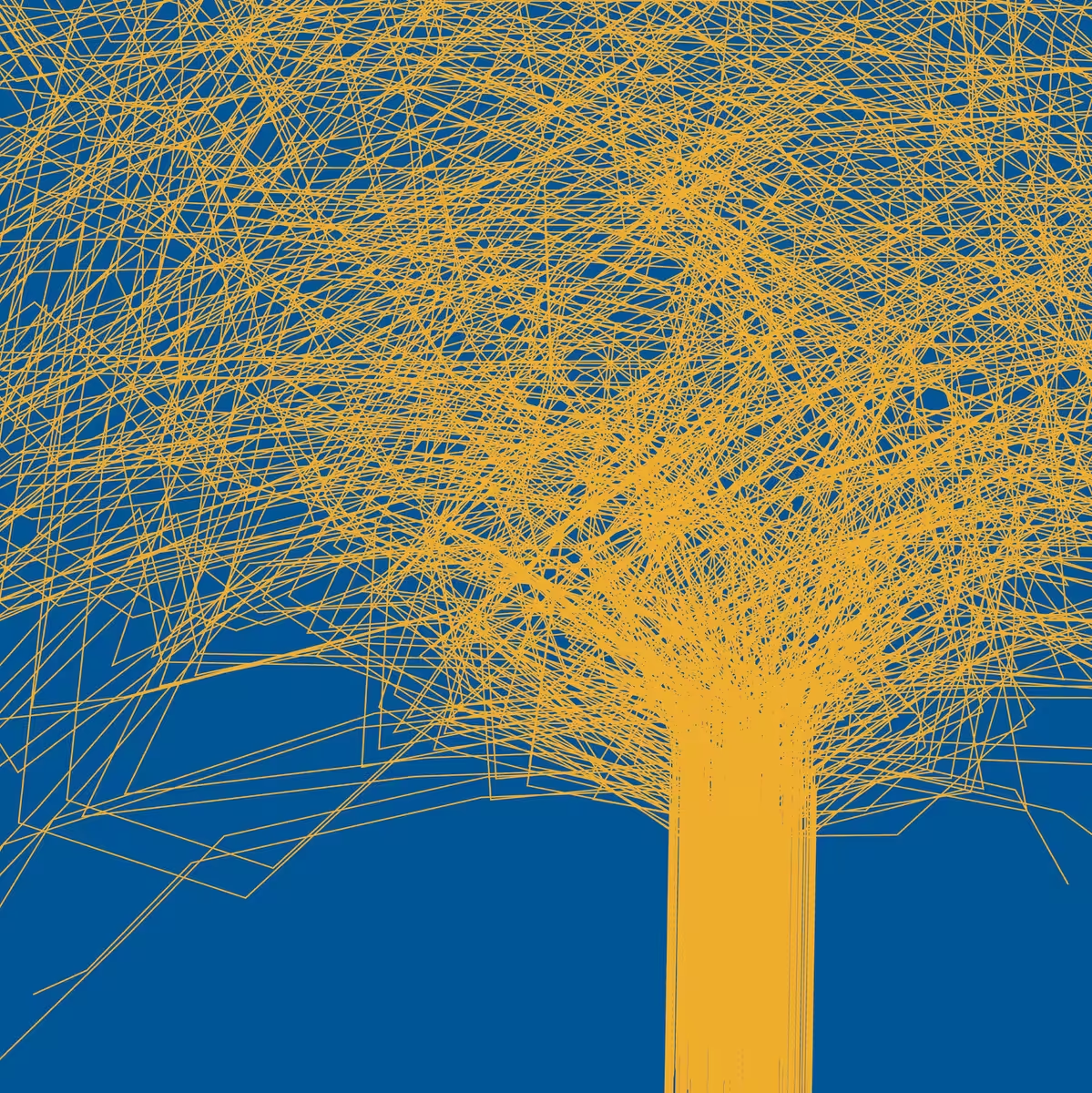
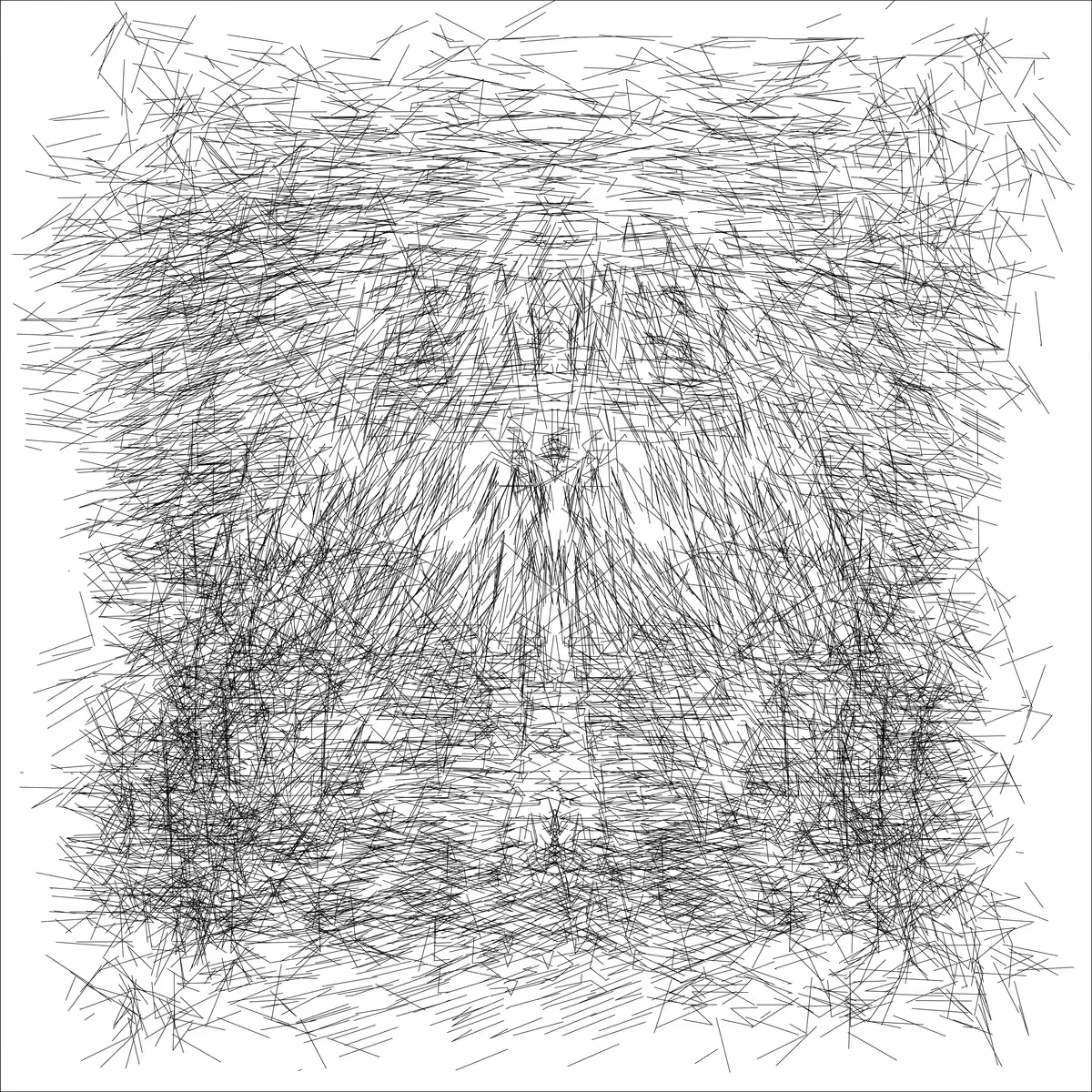
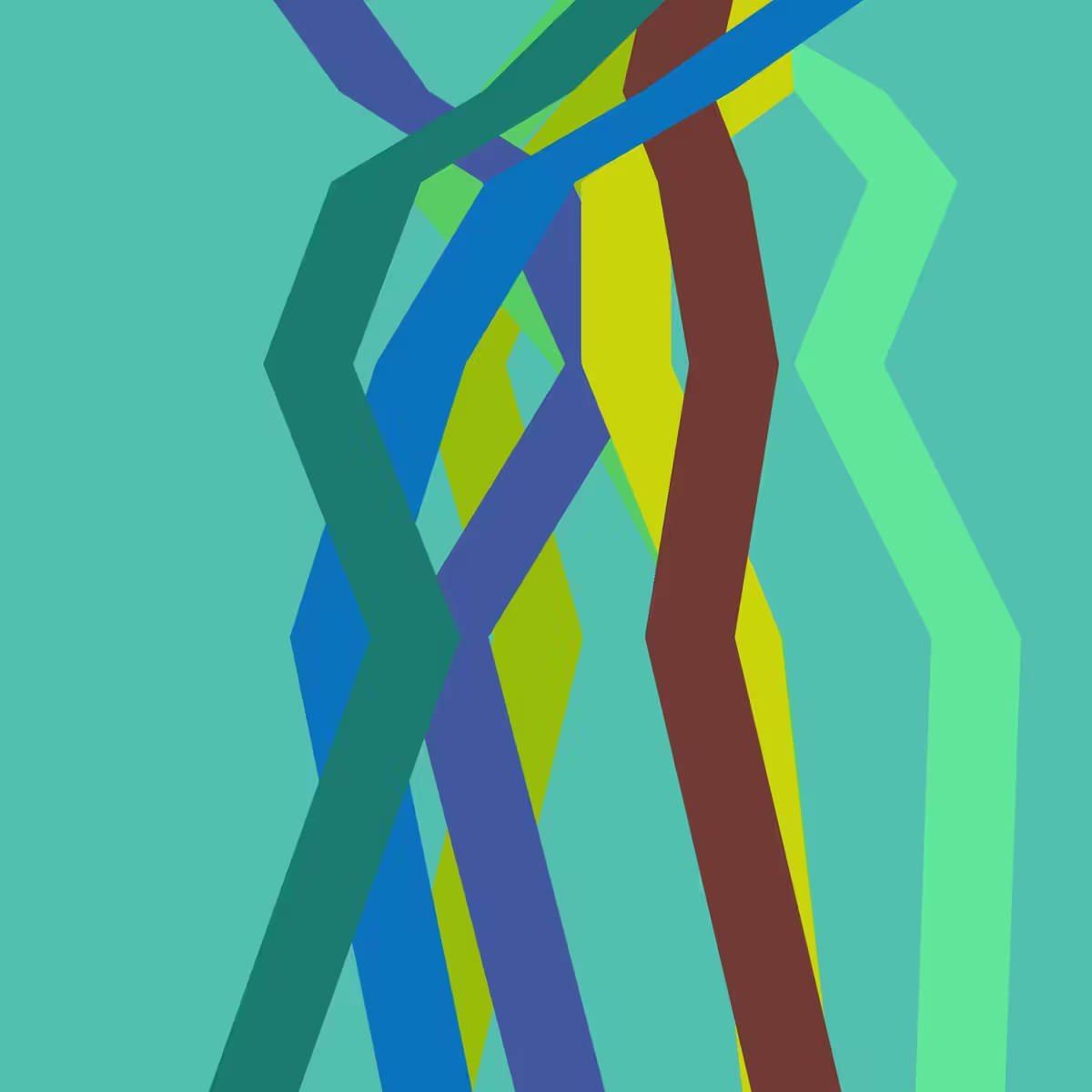
Hans Dehlinger uses drawing as an exploration of rules and their visible consequences. A line may be repeated, displaced, interrupted or combined with thousands of others to produce a surface that appears dense, delicate or spatial.
Born in Stetten im Remstal in 1939, Dehlinger trained as a carpenter before studying architecture at the Technische Hochschule Stuttgart from 1961 to 1968. In Stuttgart he encountered the philosopher Max Bense, whose discussions of aesthetics offered a way to think about art through structures and processes. He continued his education at the University of California, Berkeley, completing a master’s degree in architecture in 1969 and a doctorate in 1978. From 1980 to 2004 he taught the foundations of industrial design at the University of Kassel.
His own chronology dates his first engagement with computers and programming to 1966. His artistic use of computers began later in 1983. His subsequent work developed around the pen plotter, a device that translates programmed coordinates into the movement of a drawing instrument.
His early cube compositions demonstrate the relationship between a simple geometric proposition and a complicated field of lines. In 1986 and 1987, he used a Tektronix computer, BASIC programs and an A3 plotter at Kassel to investigate the cube through repeated transformations. Later work continued to test how a recognizable structure could persist within an accumulation of marks.
Dehlinger describes the computer as a means of developing a distinct kind of drawing. He devises procedures, writes programs and examines their plotted results. Some works emerge from a single execution; others develop through intermediate stages and further decisions. Changes in density and direction can give straight lines the appearance of shading, movement or volume.
Exhibitions have included the SIGGRAPH Art Show at the Computer Museum in Boston in 1989–90, a 2021 retrospective at Hallenbad Ost in Kassel, and Plotted Lines at EXPANDED.ART in Berlin in 2023. His work is held by institutions including the Victoria and Albert Museum and the Block Museum of Art. More recently, on-chain digital editions and the continuously changing Fibo project have extended his investigation of line into new forms of display.
Exhibitions
- 1989–90 - SIGGRAPH Art Show, The Computer Museum, Boston, 29 June 1989–5 January 1990.
- 1990 - Second International Symposium on Electronic Art (SISEA), Groningen, 12–16 November.
- 1994 - Zeichnungen aus Algorithmen: Die geplottete Linie als künstlerische Herausforderung, Museum Thonet, Frankenberg, 12 June–28 August.
- 2013–14 - Frieder Nake & Friends, DAM Gallery, Berlin, 16 November 2013–25 January 2014.
- 2015 - Aesthetica: 50 Jahre computergenerierte Kunst, DAM Gallery, Berlin, 30 May–1 August.
- 2021 - Retrospektive Hans Dehlinger: Algorithmisch generative Experimente, Hallenbad Ost, Kassel, 2 September–15 October.
- 2023 - Plotted Lines, EXPANDED.ART, Berlin, 17 May–4 June.