
← Library

LP or sound recording · Published

HPSCHD / String Quartet No. 2

1969

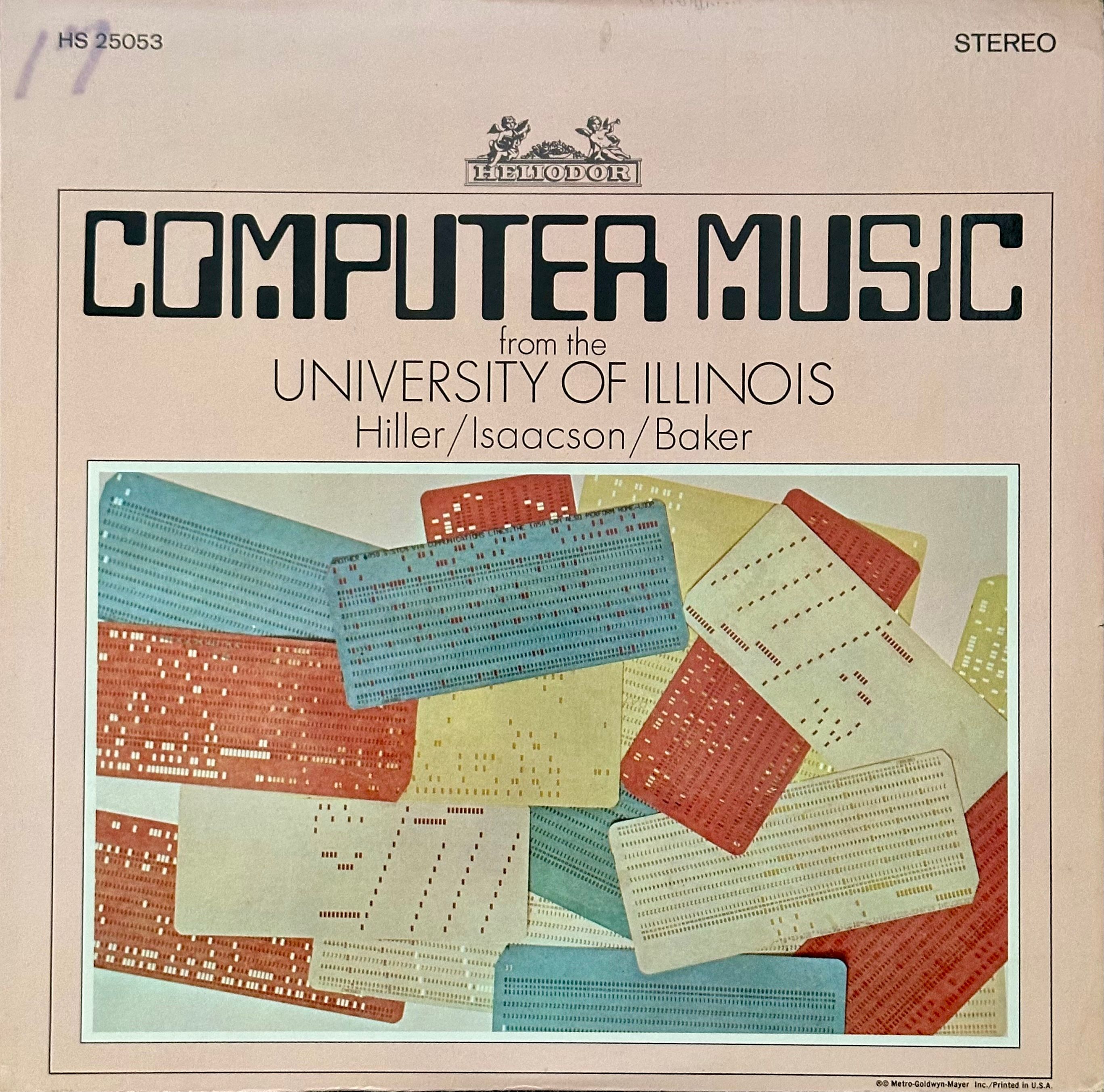
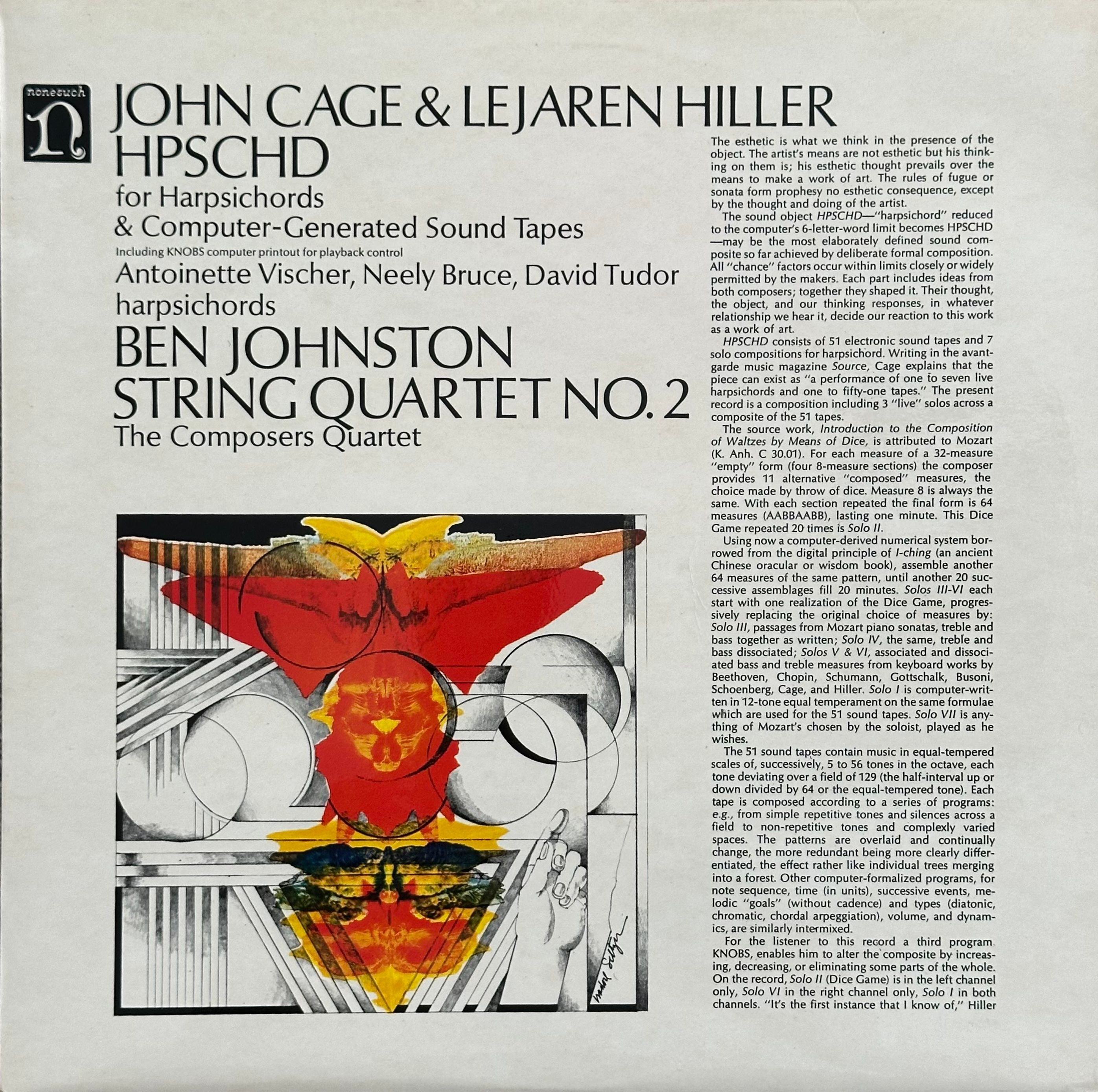
John Cage and Lejaren Hiller's HPSCHD was one of the first large-scale works to combine computer-assisted composition, computer-generated sound, chance operations and immersive multimedia. The most radical feature of the record is the large KNOBS computer printout supplied with it. Generated on a CDC 6400 computer, each sheet provides a different sequence of settings for the left and right volume, bass and treble controls at five-second intervals. The initial edition had 10,000 individually generated sheets, so every purchaser received a distinct set of instructions for transforming the recording. Each copy functioned like an individual output from a long-form generative-art system: a shared algorithm produced numerous related but unique realizations of a single work. The mass-produced record became a personalized computational artwork. KNOBS is a precursor to today’s generative art, decades before artists began distributing algorithmically differentiated works through digital platforms and blockchains.

Author / editor
John Cage, Lejaren Hiller, Ben Johnston
Publisher
Nonesuch Records
London
Format
LP Vinyl Record
Language
English
Reference
Cybernetic Serendipity

How It Was Made

  • Mainframe Algorithmic Composition: Cage and Hiller realized HPSCHD between 1967 and 1969 at the University of Illinois Urbana-Champaign using ILLIAC II and IBM 7090 computers. Hiller wrote routines in FORTRAN to translate both the I Ching’s binary divination system and Mozart’s dice game (Musikalisches Würfelspiel, K. 516f / Anh. C 30.01) into algorithmic rules for pitch, duration, and timbre.
  • Layered Microtonal Tapes: The work synthesizes 51 computer-generated electronic sound tapes. Each tape employs equal-tempered divisions of the octave ranging from 5 to 56 scale steps, yielding complex microtonal density and phase patterns.
  • Harpsichord Collages: Seven solo harpsichord parts were scored by algorithmically deconstructing and replacing measures from Mozart’s dice game with historical keyboard snippets from Beethoven, Chopin, Schumann, Gottschalk, Busoni, and Schoenberg. For the LP edition, a composite of three harpsichord solos (performed by David Tudor, Antoinette Vischer, and Neely Bruce) was layered over a mixdown of the 51 tapes.
  • The KNOBS Interactive Program: To bring the indeterminate, multichannel experience of the live premiere into the domestic listening space, Hiller programmed KNOBS on a CDC 6400 computer. Each LP copy included a unique computer printout with time-stamped instructions directing the listener to manipulate volume, balance, and treble/bass dials every few seconds, making the playback mix active and indeterminate.
  • Just Intonation Construction: On Side B, Johnston’s String Quartet No. 2 rejected standard 12-tone equal temperament in favor of an intricate, 53-tone just intonation pitch space. Performed by The Composers Quartet, the piece required the string players to execute precise micro-intervals based on pure harmonic ratios rather than tempered approximations.

Why It Matters

  • Pioneering Computer-Aided Music: HPSCHD was one of the earliest large-scale artistic proofs that digital mainframes could function not merely as calculators, but as creative partners capable of orchestrating massive stochastic structures.
  • Rethinking Recorded Media: Through the KNOBS sheet, Cage and Hiller challenged the fixed, passive nature of the phonograph record. They transformed the domestic hi-fi stereo into a participatory performance interface decades before interactive digital media became commonplace.

Premiere

  • The full work premiered on May 16, 1969, as a nearly five-hour environment in the University of Illinois Assembly Hall: seven amplified harpsichords, dozens of tape machines and loudspeakers, 6,400 slides and forty films, many supplied by NASA, surrounded an audience free to move through the space. It was closer to an immersive installation or happening than a conventional concert, with no single position from which everyone experienced the same work. The University of Illinois Archives preserves the original sound recordings and production history.