
← Library

LP or sound recording · Published

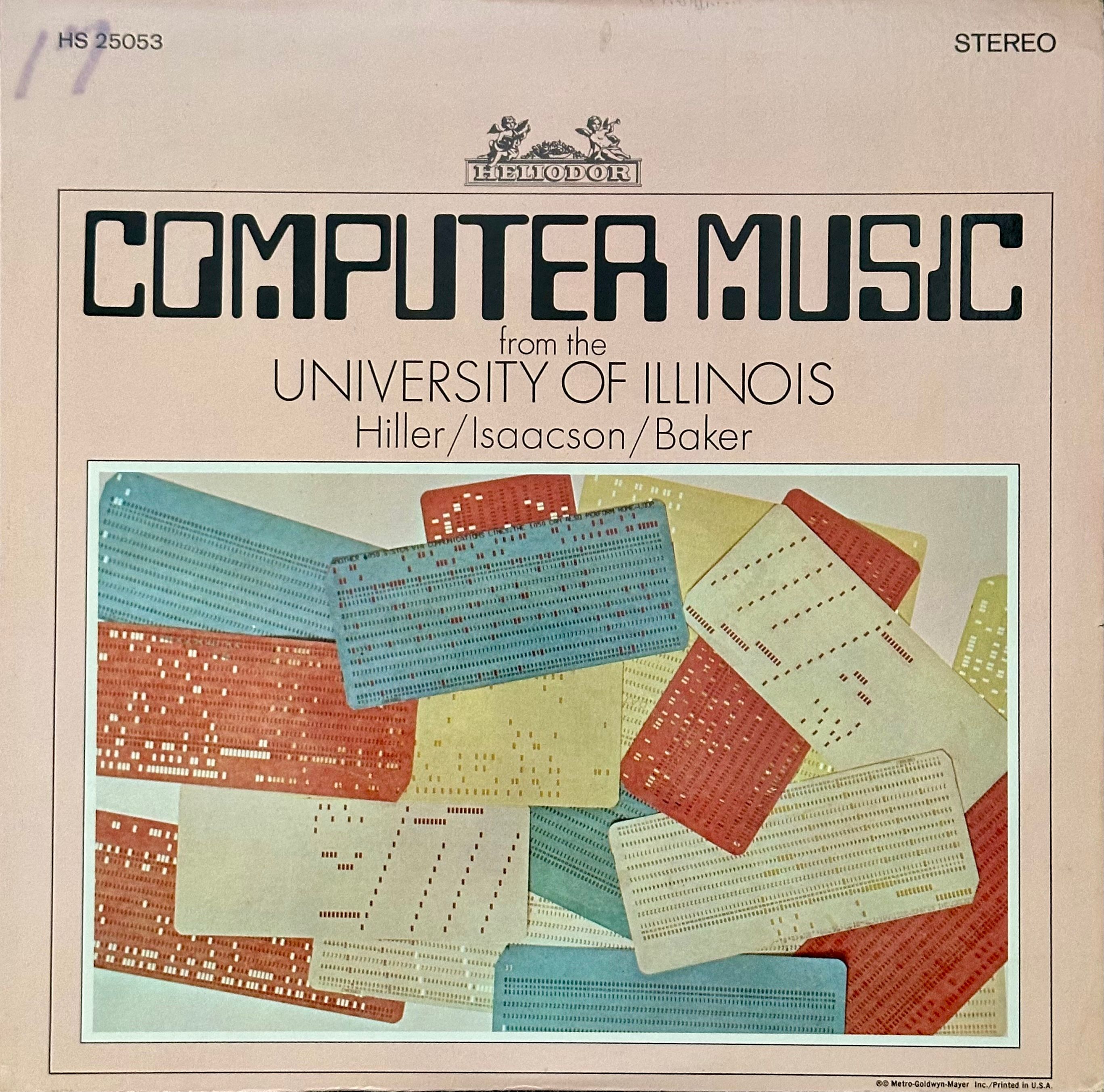
Computer Music from the University of Illinois

1967

The Illiac Suite is the first piece of music composed using a computer. The ILLIAC I computer generated musical material according to programmed rules and probabilities, while human musicians performed the resulting score. The cover artwork features vintage 80-column IBM punch cards used to feed algorithmic composition data into mainframe systems.

Author / editor
Lejaren Hiller, Leonard Isaacson, Robert Baker
Publisher
Heliodor
United States
Format
LP Vinyl Record
Reference
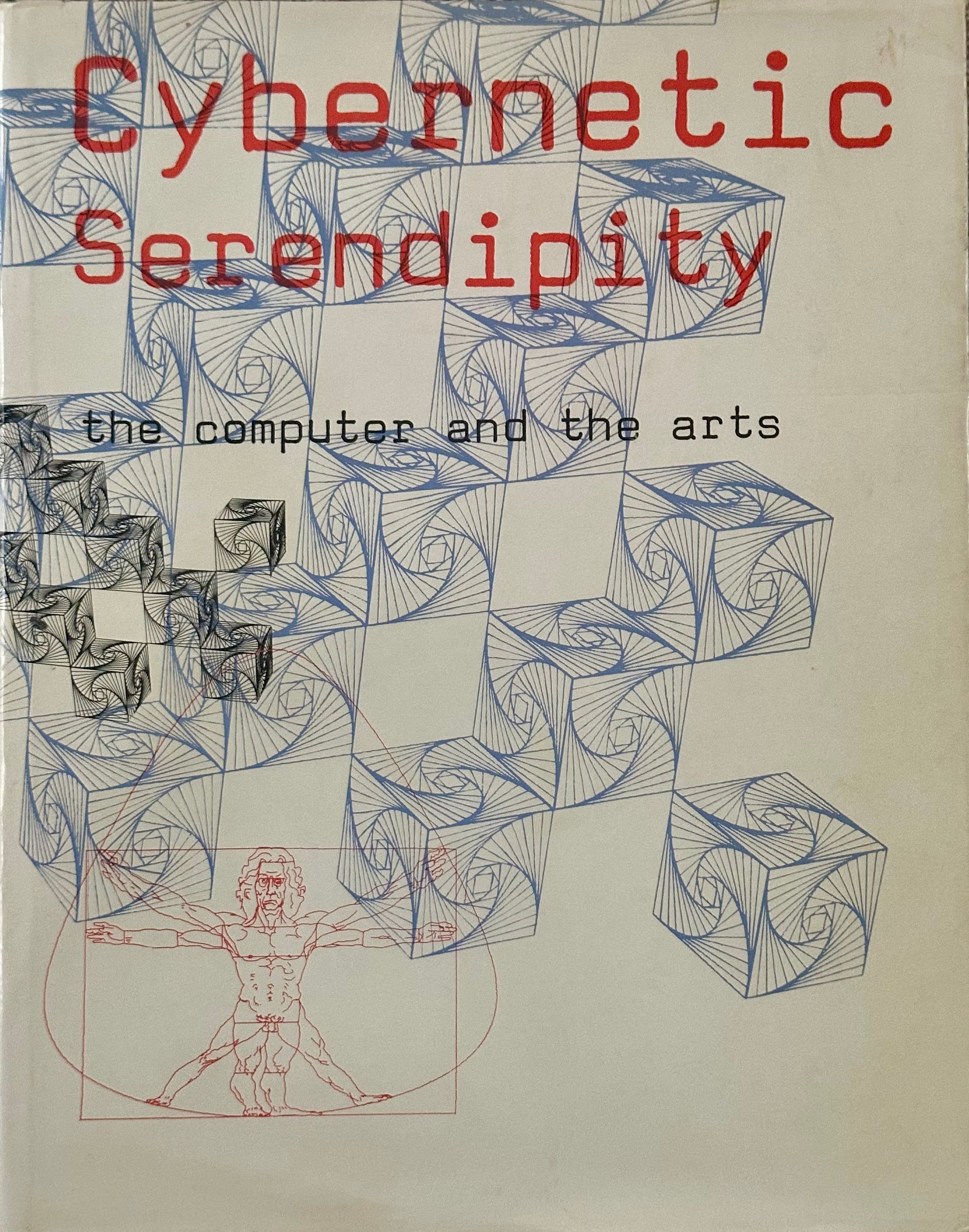
Cybernetic Serendipity

The Illiac Suite for String Quartet (composed 1955–1957, later cataloged as String Quartet No. 4) is historically recognized as the first major piece of music composed by an electronic computer.

Origins & Conception

  • The Collaborators: The project began at the University of Illinois at Urbana-Champaign (UIUC) between Lejaren Hiller, a research chemist who had studied composition with Roger Sessions and Milton Babbitt, and Leonard Isaacson, a fellow chemist and mathematician.
  • The Hardware: They used the ILLIAC I (Illinois Automatic Computer), a room-sized, first-generation mainframe built in 1952 using 2,800 vacuum tubes and weighing roughly 5 tons.
  • The Idea: Hiller and Isaacson were originally using the ILLIAC to model polymer chain behavior via Monte Carlo random-walk algorithms. Hiller realized that statistical modeling and constrained probability could also generate and filter musical pitches, rhythms, and counterpoint rules.

How It Was Created: The Algorithmic Process

The machine did not synthesize sound; it generated alphanumeric score instructions via punch cards, which were subsequently transcribed by hand into traditional musical notation for a standard human string quartet to play.

The composition was built around the "generate-and-test" (Monte Carlo) method:

  1. Random Number Generation: The ILLIAC generated pseudo-random numbers corresponding to musical parameters (pitch, rhythm, dynamics, playing technique).
  2. Rule-Based Screening Filters: The algorithm tested each generated note against specific stylistic or structural rules. If a note violated a counterpoint rule (e.g., parallel fifths), it was rejected, and the computer rolled again until a valid note was found.

Musical Structure (The Four Experiments)

Each of the suite's four movements served as a distinct computational experiment testing increasing complexity:

  • Experiment 1 (Mvt. 1): Explores cantus firmus lines and simple counterpoint using strict 16th-century modal polyphony (Fuxian counterpoint rules).
  • Experiment 2 (Mvt. 2): Introduces four-part polyphony, random voice leading, and dynamic shaping, testing classical harmony constraints.
  • Experiment 3 (Mvt. 3): Shifts to 20th-century serial techniques, testing twelve-tone chromatic rows, metric modulation, and non-traditional rhythm distributions.
  • Experiment 4 (Mvt. 4): Uses stochastic processes and Markov chains (transition probability matrices from zero-order to higher-order dependencies) to balance sheer chaos against structural coherence.

Reception & Legacy

Premiered in August 1956 at UIUC by the University of Illinois String Quartet, the suite stirred significant controversy among traditionalists who debated whether algorithmic generation could constitute "art." However, it established UIUC’s Experimental Music Studios (EMS) in 1958 and laid the technical groundwork for algorithmic composition, generative music systems, and computer-assisted scoring.

Tracklist

  • Side A:
    • Lejaren Hiller & Leonard Isaacson - Illiac Suite for String Quartet (1956–1957)
      • Movement 1: Presto – Andante – Allegro
      • Movement 2: Scherzo
      • Movement 3: Allegro con brio
      • Movement 4: Molto allegro
      • Performer: The University of Illinois String Quartet
  • Side B:
    • Lejaren Hiller & Robert Baker - Computer Cantata (1963)
      • Performers: Helen Hamm (Soprano), Contemporary Chamber Players of the University of Illinois conducted by Jack McKenzie