
Artist · 1924–1994
Lejaren Hiller
American
New York, USA · Urbana, Illinois, USA · Buffalo, New York, USA
Lejaren Hiller (1924–1994) was an American composer and chemist who, with Leonard Isaacson, created the Illiac Suite (1956–57), the first computer-composed piece of music. He went on to found the University of Illinois Experimental Music Studio, develop the MUSICOMP system with Robert Baker, and collaborate with John Cage on HPSCHD, establishing a foundational model for algorithmic music composition.
Lejaren Hiller was a chemist and composer who made one of the decisive breakthroughs in computer music. With Leonard Isaacson, he created the Illiac Suite, the first computer-composed piece of music. By encoding musical rules and probabilities for the ILLIAC computer, Hiller demonstrated that a computer could generate musical structure rather than merely calculate or reproduce sound.
Chemistry and Musical Formation
Lejaren Arthur Hiller Jr. was born in New York City in 1924. At Princeton University he earned bachelor’s, master’s, and doctoral degrees in chemistry while also studying music and composition with Roger Sessions and Milton Babbitt. From 1947 to 1952 he worked as a research chemist at DuPont, where his scientific research included developing a reliable method for dyeing Orlon acrylic fiber.
Hiller joined the chemistry faculty at the University of Illinois in 1952 and continued his formal musical education while teaching science. His combined training encouraged him to approach composition as a problem involving rules, probabilities, information, and the systematic selection of musical possibilities.
The Illiac Suite
Working with chemist Leonard Isaacson, Hiller used the University of Illinois’s ILLIAC I computer to generate material for the Illiac Suite, completed in 1957 and later designated String Quartet No. 4. The computer did not perform or synthesize the music. Instead, Hiller and Isaacson programmed it to test and select musical material according to explicit compositional rules.
The suite consists of four experiments involving such techniques as cantus-firmus construction, species counterpoint, the generation of rhythm and dynamics, and probabilistic processes including Markov chains. The resulting data was transcribed into conventional notation and performed by human musicians. Generally regarded as the first substantial musical score composed with the aid of an electronic computer, the work established computation as a viable compositional medium rather than merely a tool for calculation or sound reproduction.
Experimental Music Studio and MUSICOMP
After earning a Master of Music degree, Hiller transferred to the University of Illinois music faculty and founded its Experimental Music Studio in 1958. One of the earliest institutions of its kind in the Western Hemisphere, the studio became an important center for computer music, electronic composition, and collaborations between musicians, scientists, and engineers.
With Robert Baker, Hiller developed MUSICOMP, a family of programs designed to express and execute compositional procedures. The system was used in creating Computer Cantata (1963), extending his earlier experiments from instrumental score generation into a more complex combination of algorithmic composition and electronic sound.
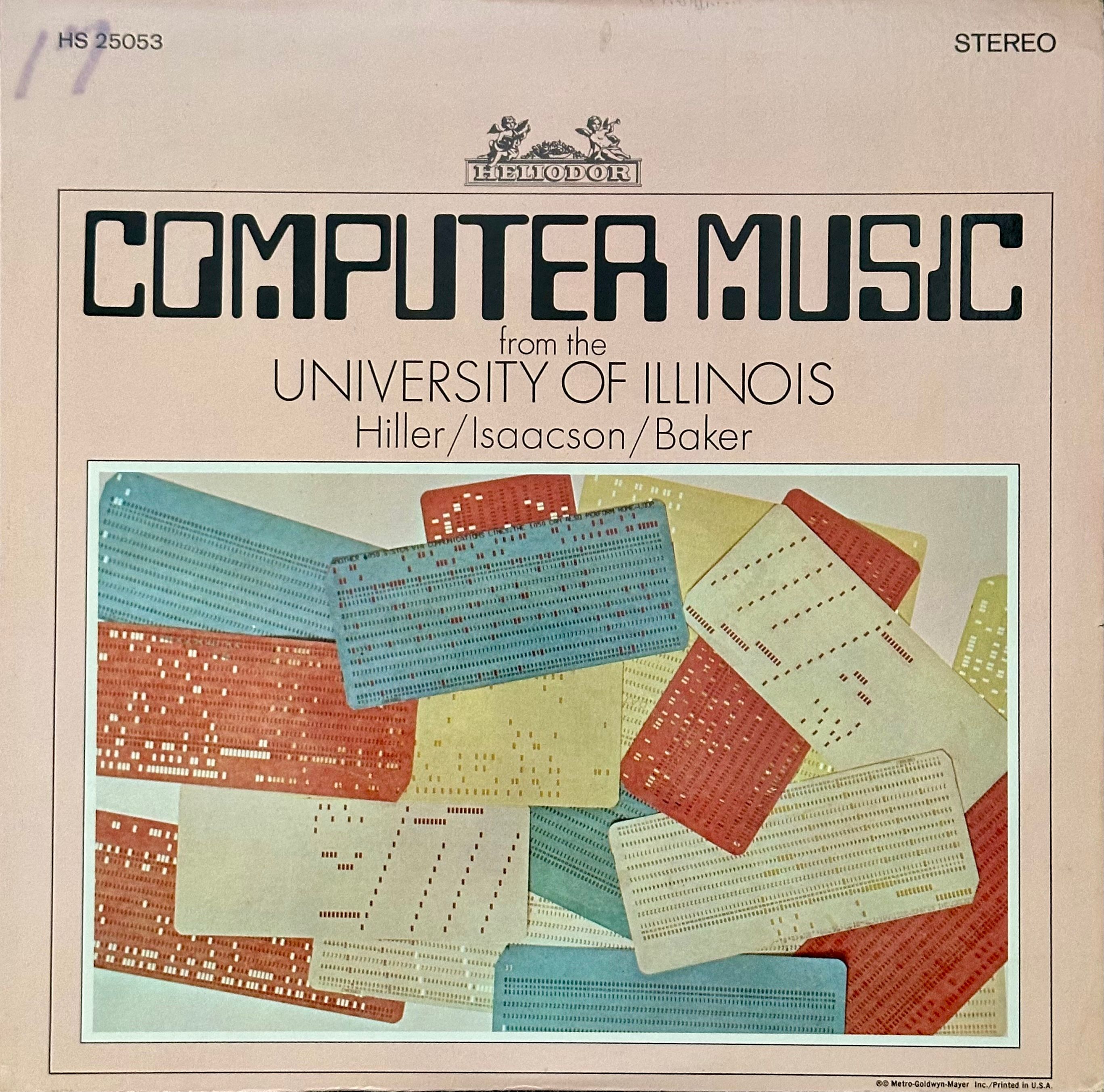
The 1967 LP Computer Music from the University of Illinois documents this period through works associated with Hiller, Isaacson, and Baker. It preserves an early moment when computer-assisted composition was beginning to circulate beyond research institutions through commercially distributed recordings.
Collaboration with John Cage
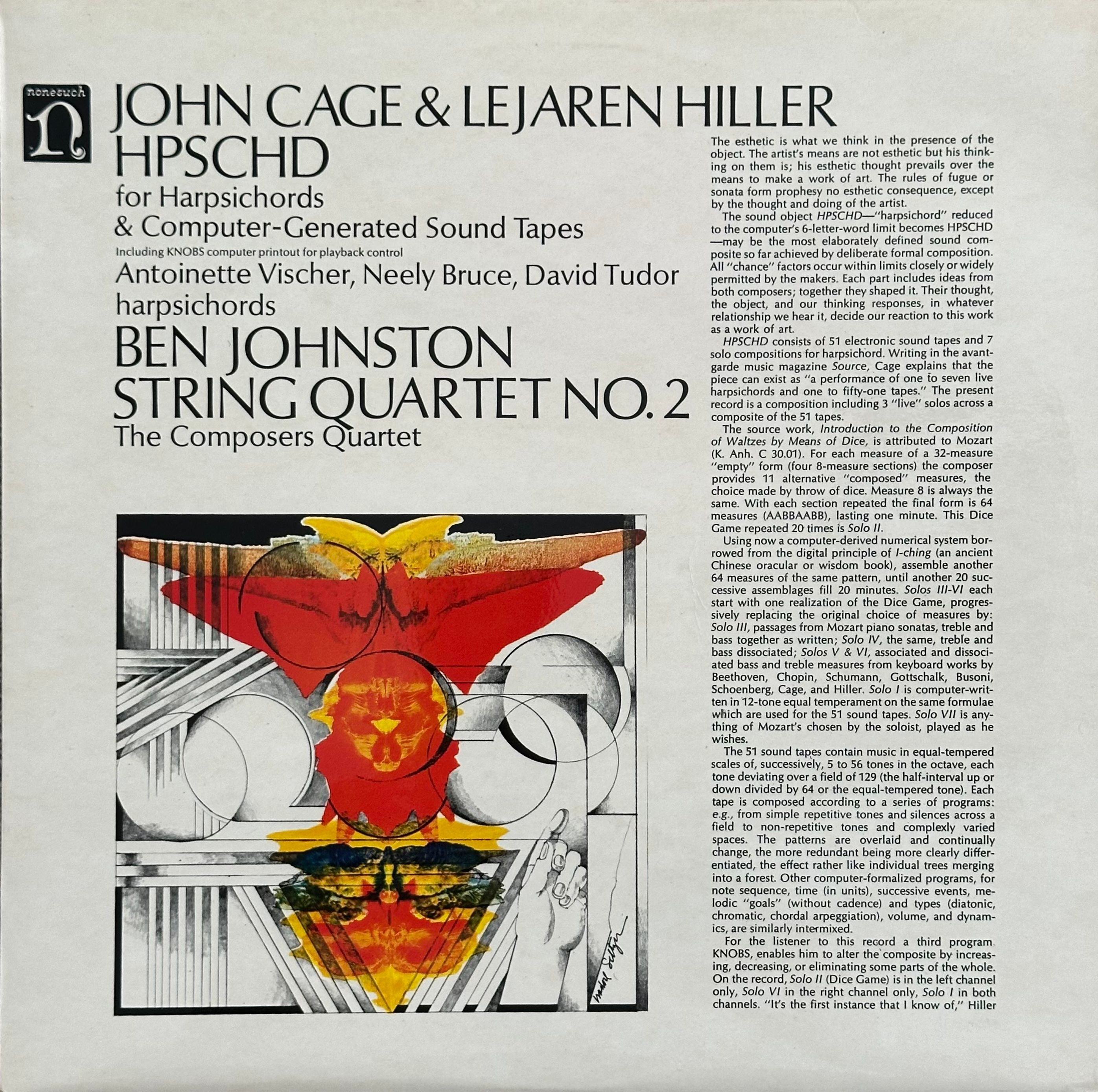
Between 1967 and 1969 Hiller collaborated with John Cage on HPSCHD. The project combined Hiller’s expertise in computer programming and algorithmic composition with Cage’s longstanding use of chance operations and indeterminate performance structures.
Premiered at the University of Illinois Assembly Hall on May 16, 1969, HPSCHD brought together seven amplified harpsichords, fifty-two channels of computer-generated sound, thousands of slides, and dozens of films. Its scale transformed computer music from a technical laboratory experiment into an immersive public environment in which no listener could experience precisely the same combination of sounds and images.
The Nonesuch LP edition further individualized the work. Its first 10,000 copies contained separately generated KNOBS printouts specifying changing playback settings, allowing each owner to produce a distinct realization of the recording.
Buffalo and Legacy
Hiller joined the music faculty of the University at Buffalo in 1968, where he established another computer-music facility and continued composing, teaching, and writing about information theory and musical structure. Although best known for his computational work, his broader catalogue incorporated serialism, indeterminacy, counterpoint, electronic sound, theatrical elements, and conventional instrumental writing.
Illness forced Hiller to retire near the end of the 1980s, and he died in Buffalo in 1994. His work established a foundational model for algorithmic composition: the computer could encode musical rules, navigate a space of possibilities, and generate material without eliminating the interpretive roles of the composer and performer.
Exhibitions
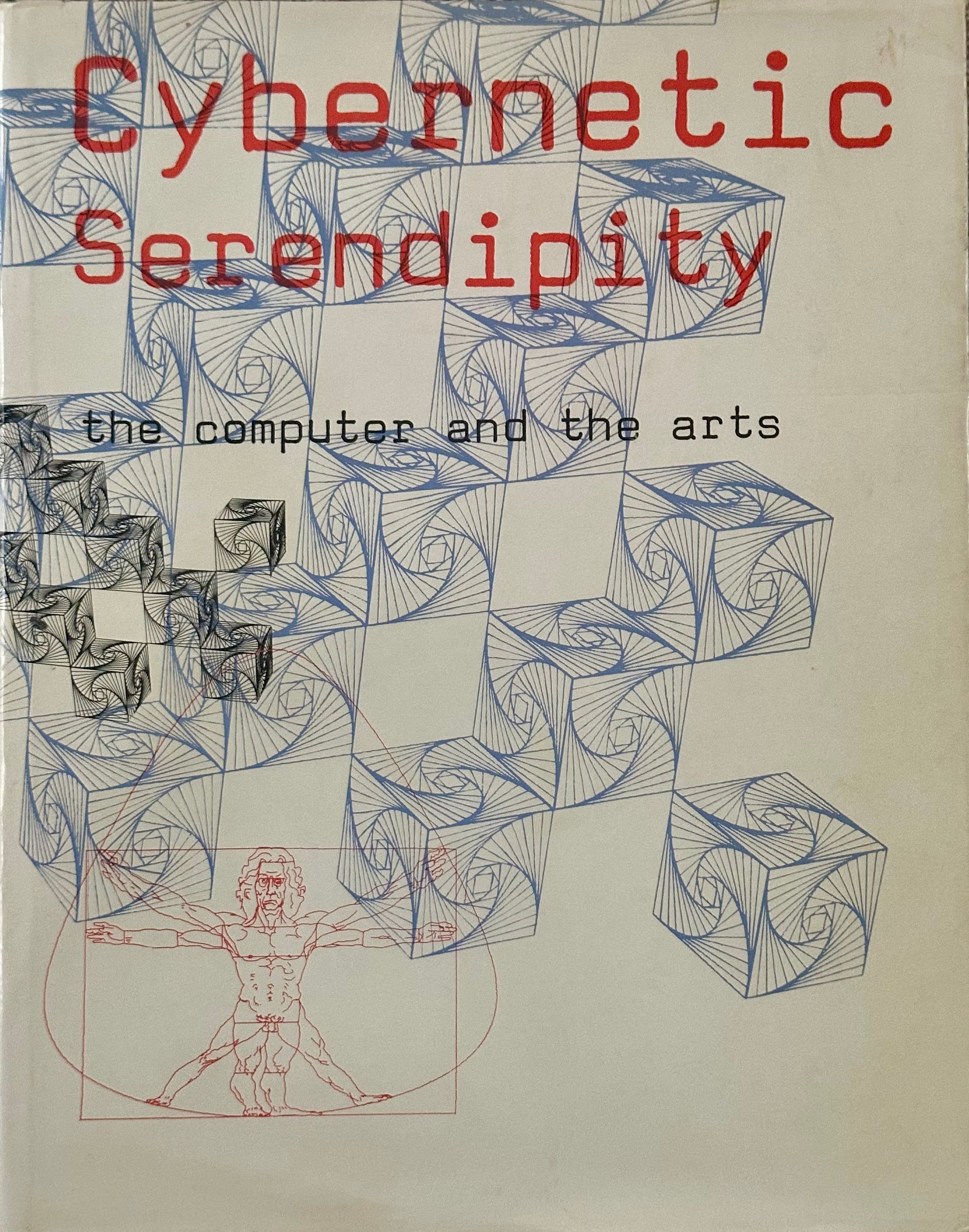
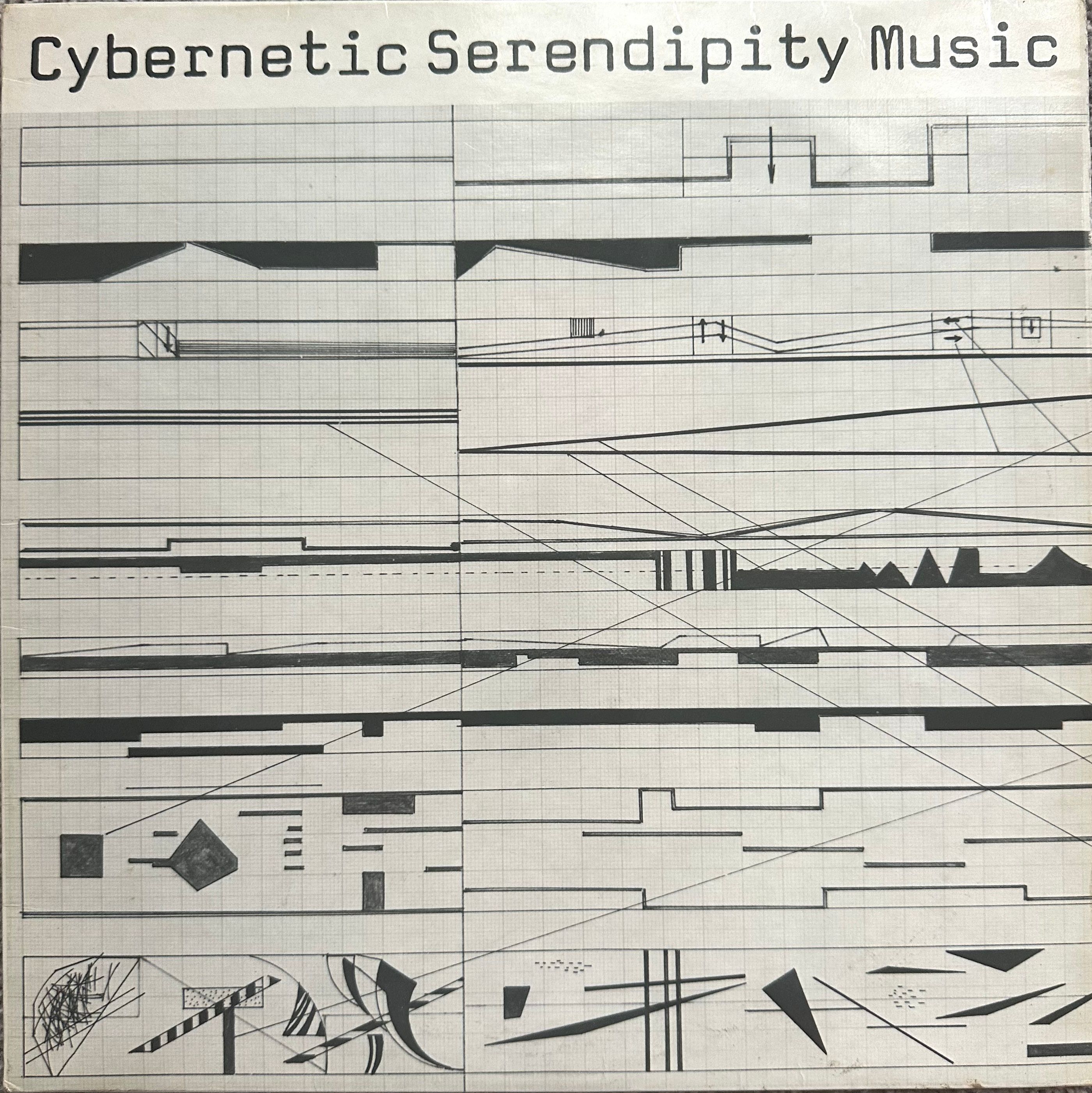
Cybernetic Serendipity - Institute of Contemporary Arts, London, 2 August–20 October 1968. Hiller was represented with Leonard Isaacson by Illiac Suite (Experiment 4) (1957) on the exhibition’s companion music LP. The exhibition catalogue also included his essay “Computer Music.”
In the library
4 items