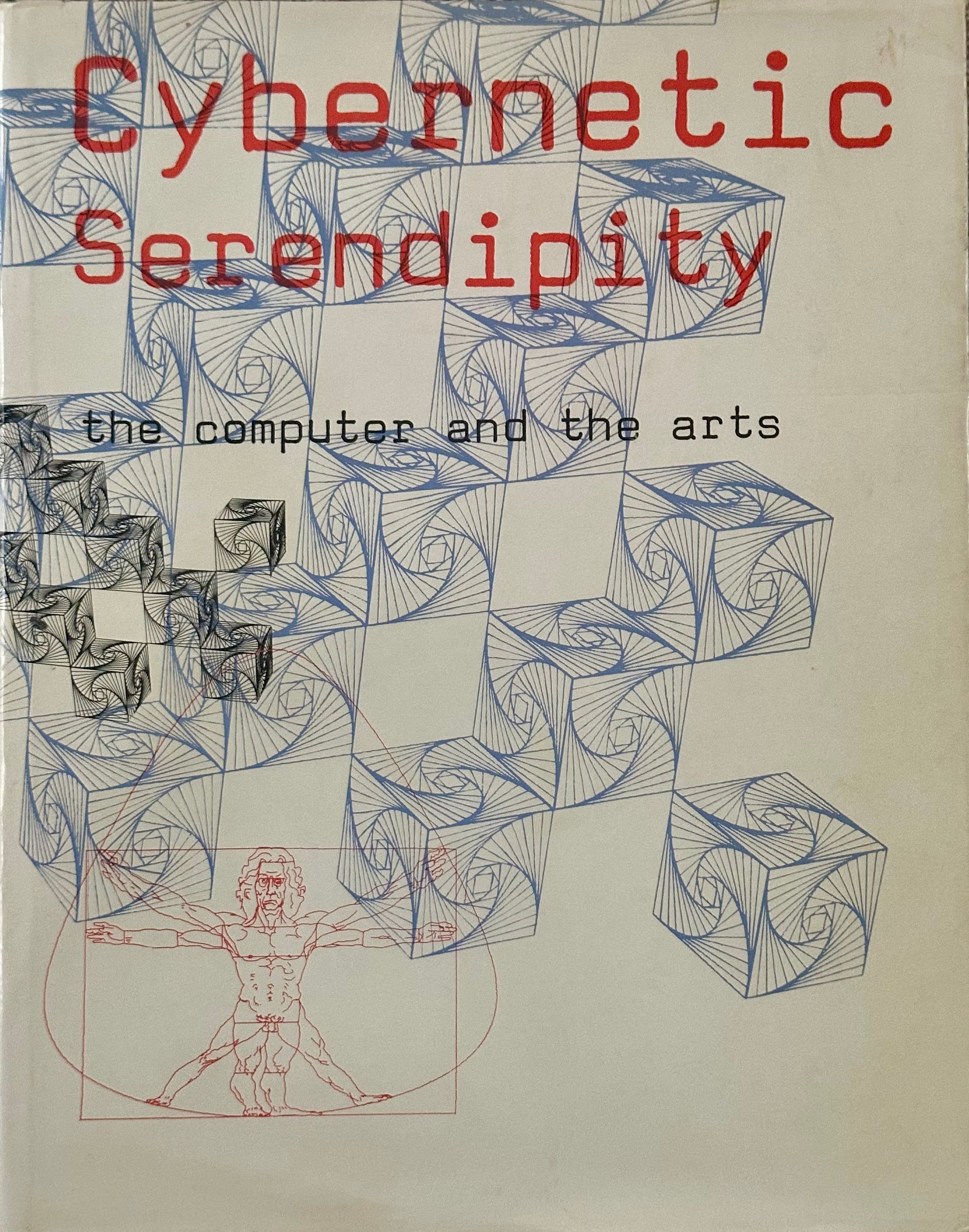
01 / 04The front cover combines multiple plotter works by Charles Csuri and Lloyd Sumner arranged by Franciszka Themerson
Open full-size image ↗Exhibition catalogue
Cybernetic Serendipity: The Computer and the Arts
1968Cybernetic Serendipity documents the first international exhibition in 1968 devoted to the relationship between art and new technology. Curated by Jasia Reichardt, it brought more than 130 artists, composers, engineers, mathematicians and scientists together around computer graphics, algorithmic music, cybernetics, robotics and machine creativity. This is a foundational document of digital art history.
- Author / editor
- Jasia Reichardt, editor. Franciszka Themerson, design & layout.
- Publisher
- Studio International
London & New York - Format
- Book
- Pages
- 104
- Language
- English
- Reference
- Cybernetic Serendipity
PDF document
Full catalogEnglish · 139 MB
Reichardt, Jasia, ed. Cybernetic Serendipity: The Computer and the Arts. London: Studio International, 1968
Related in the collection
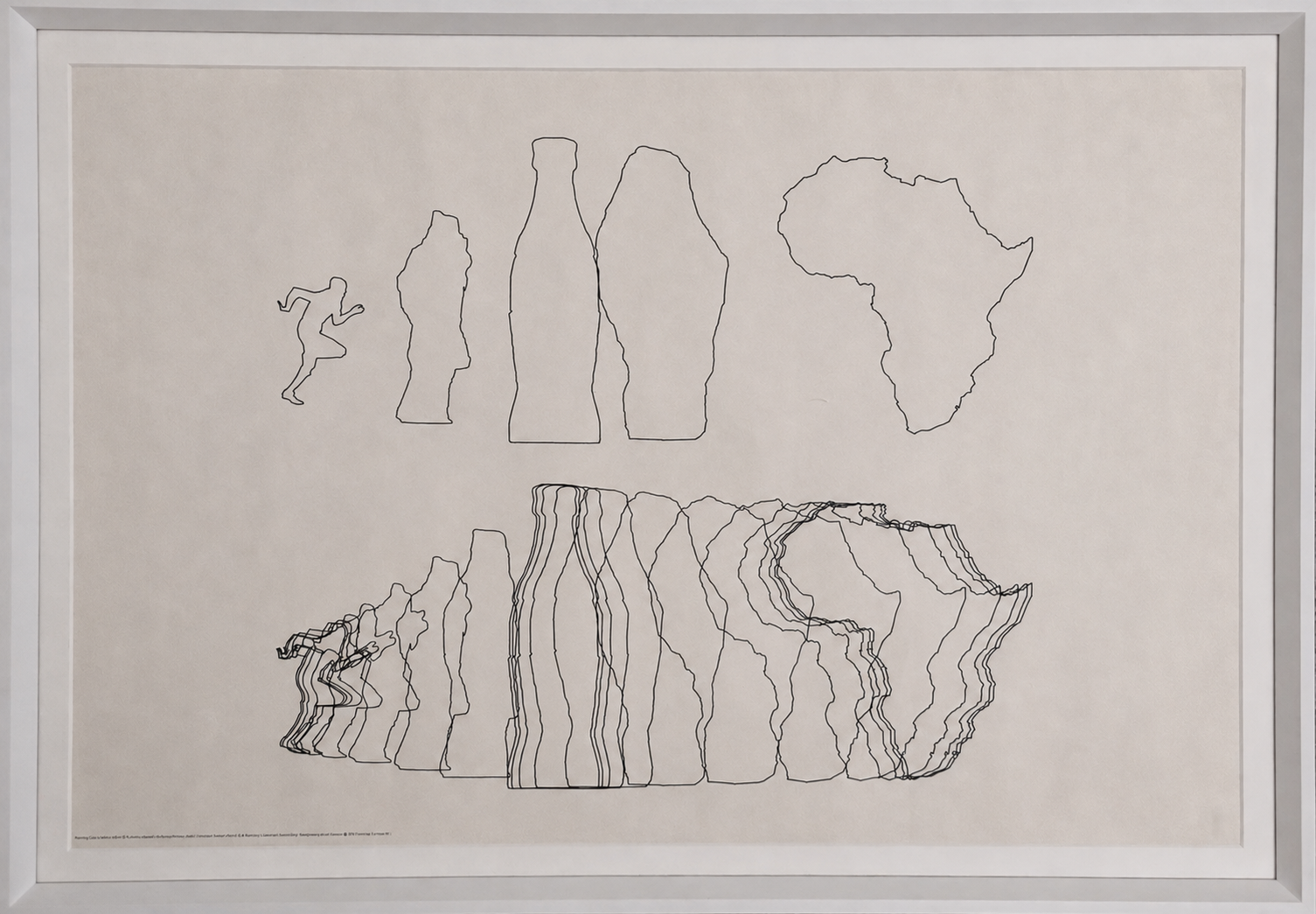
Computer Technique Group (CTG), 1968
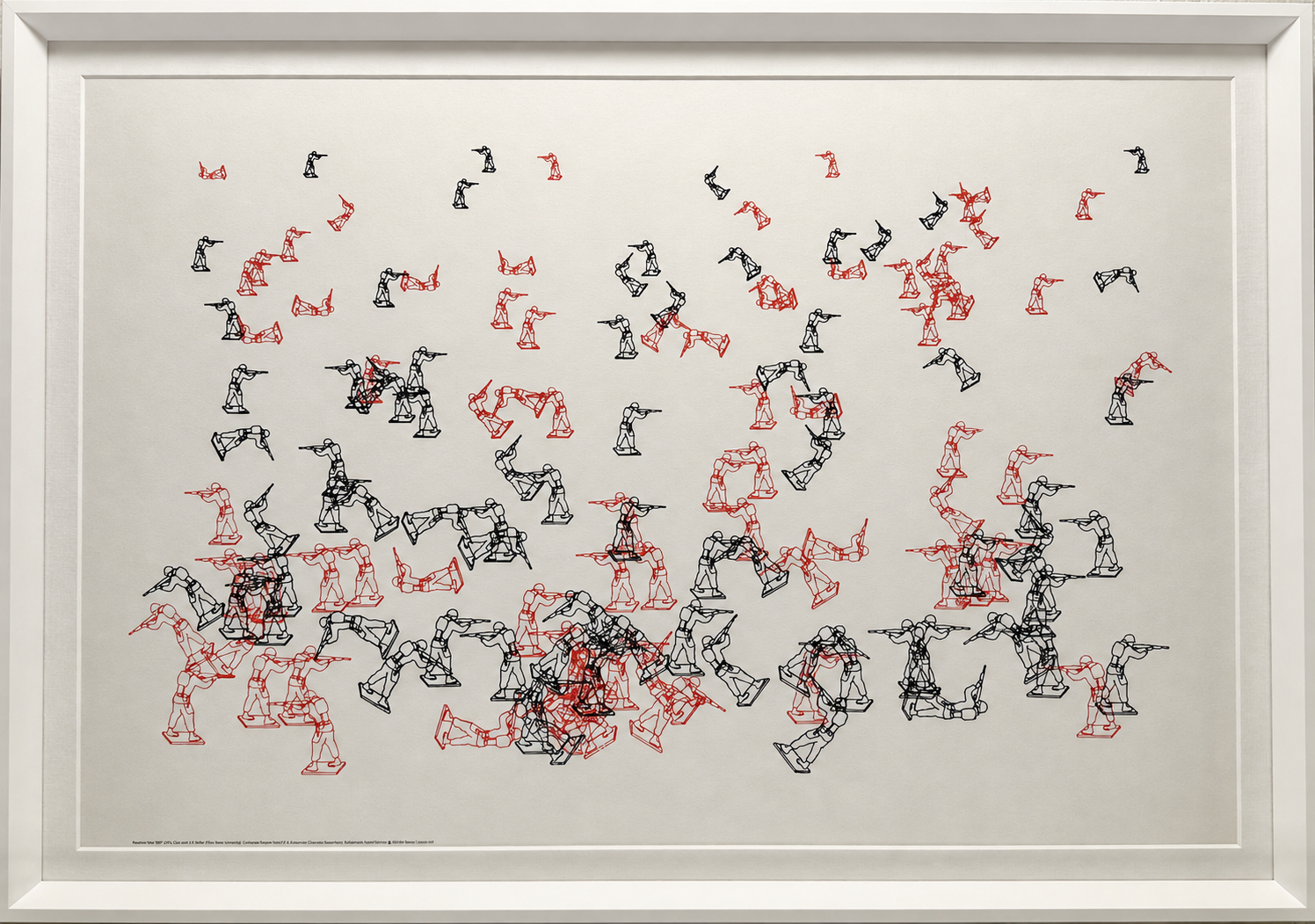
Charles Csuri, 1967
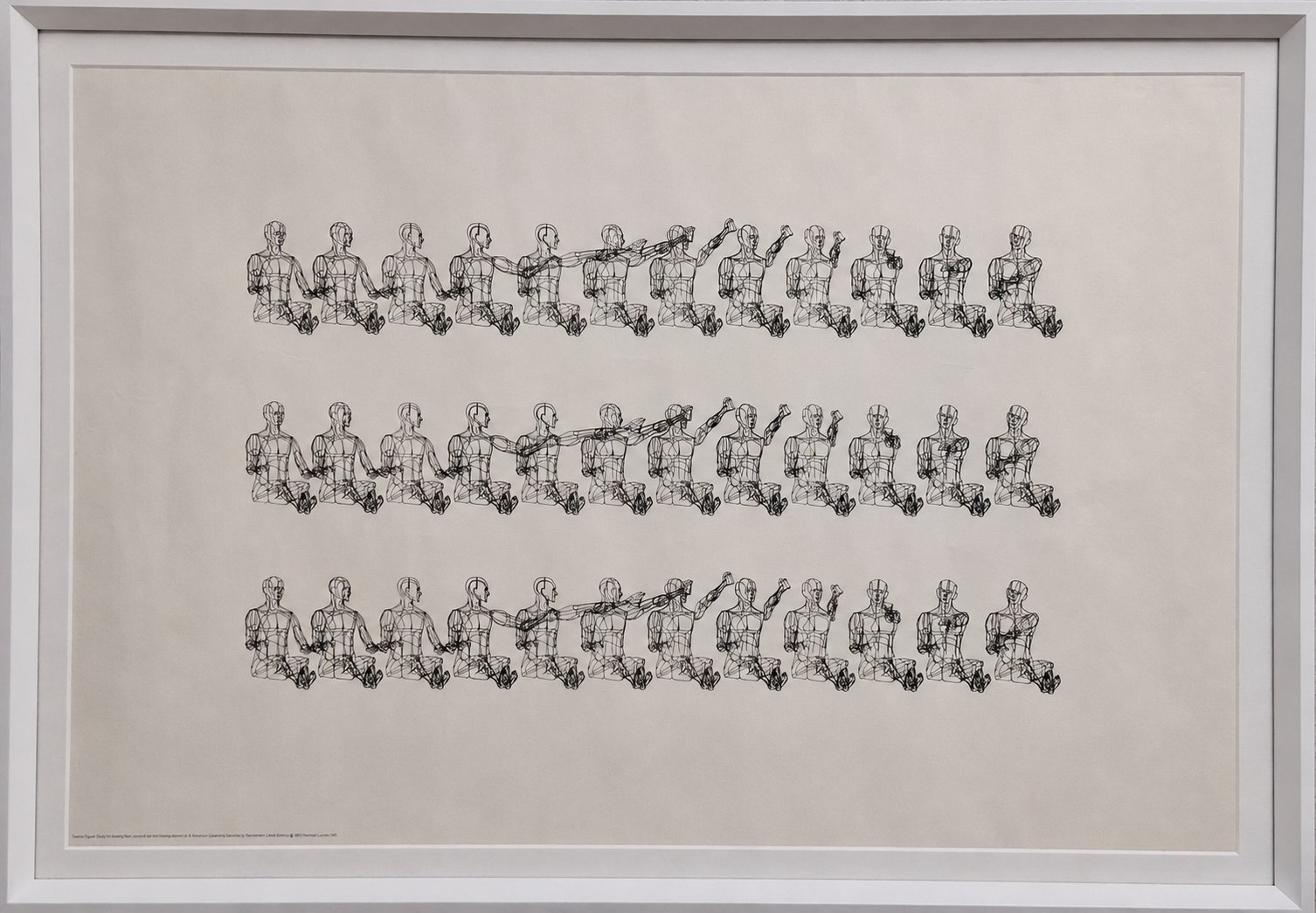
William Fetter, 1968
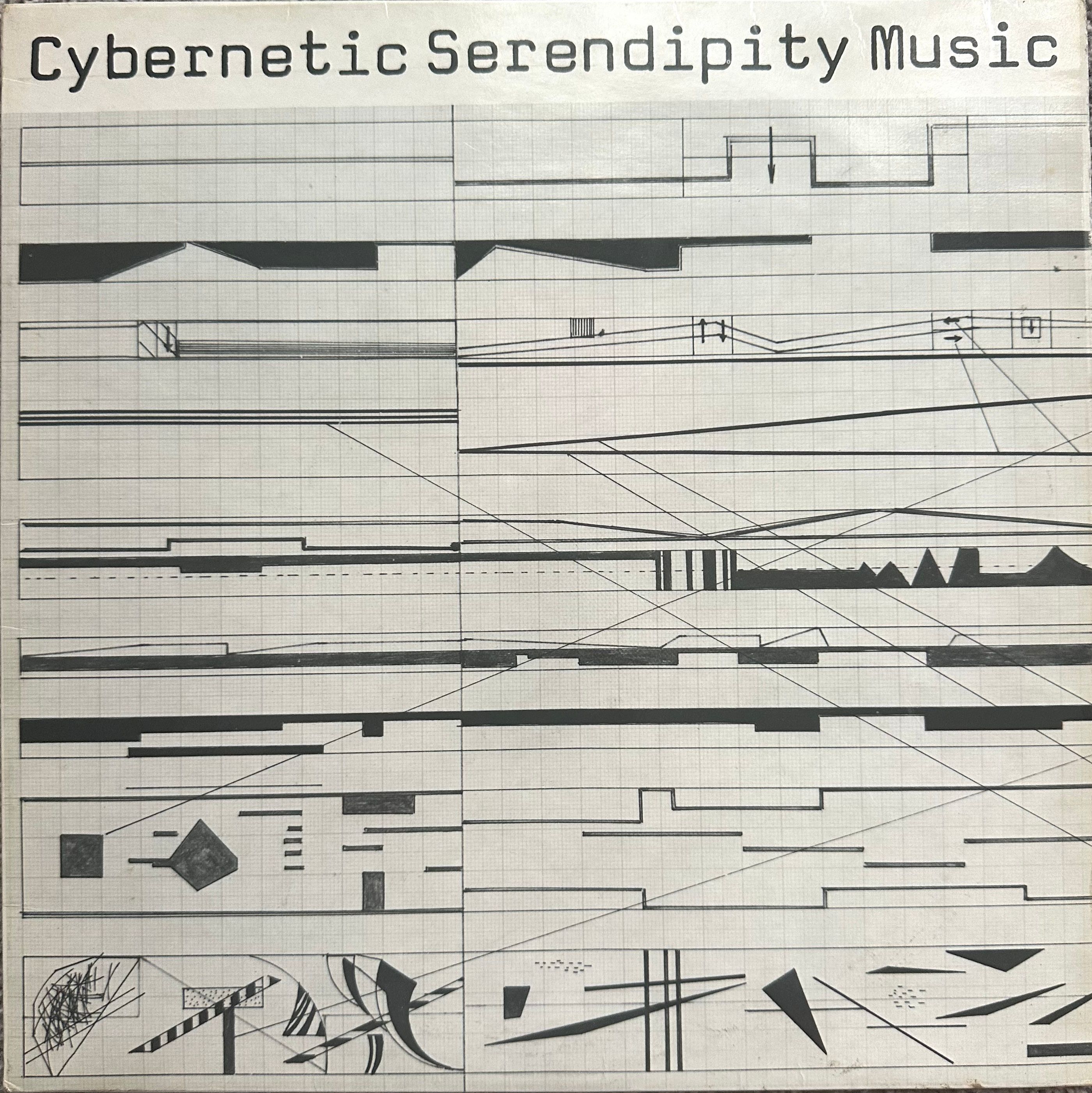
Peter Schmidt, editor. Peter Zinovieff, cover artist., 1968

Thomas Albright, 1969
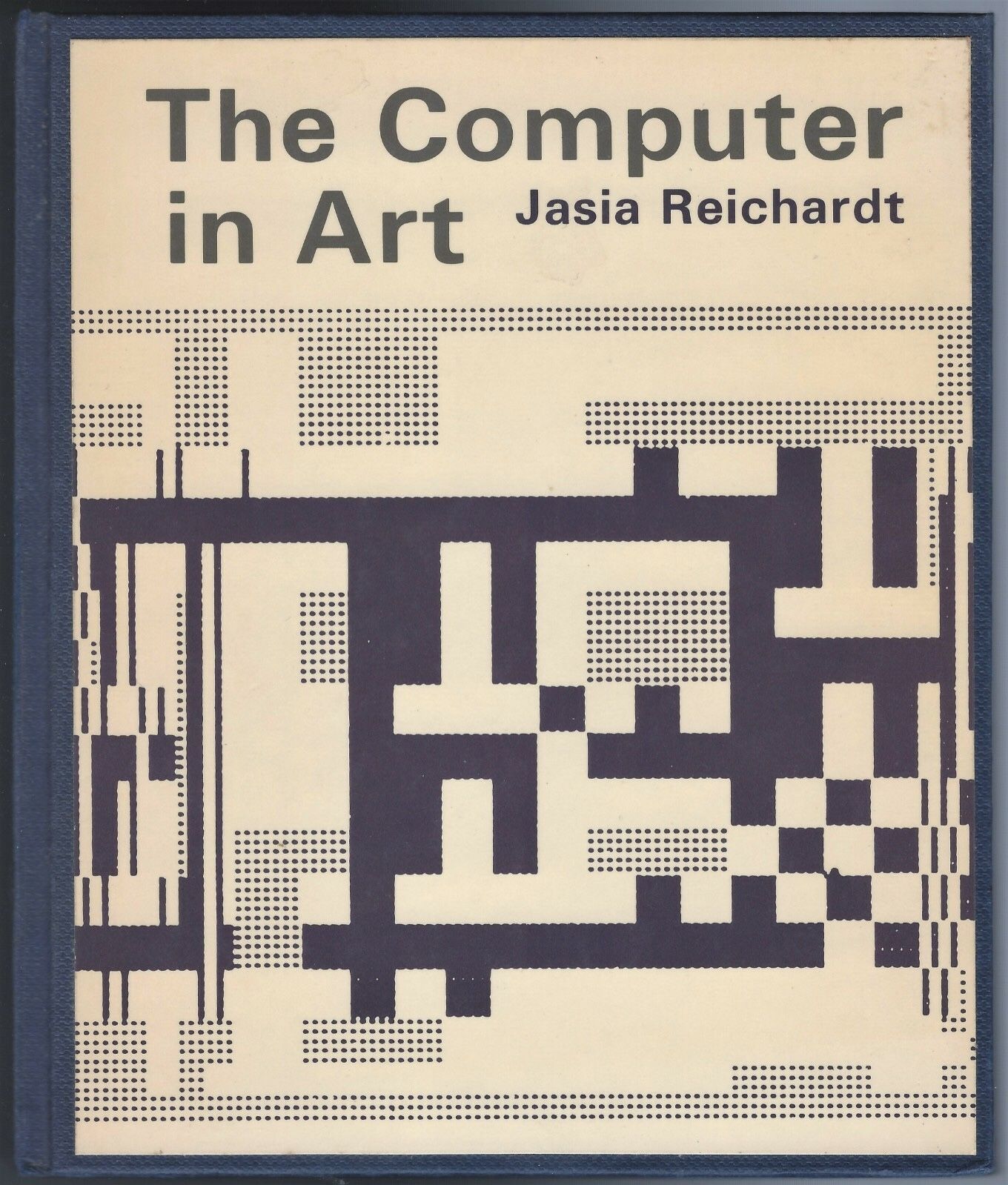
Jasia Reichardt, 1971
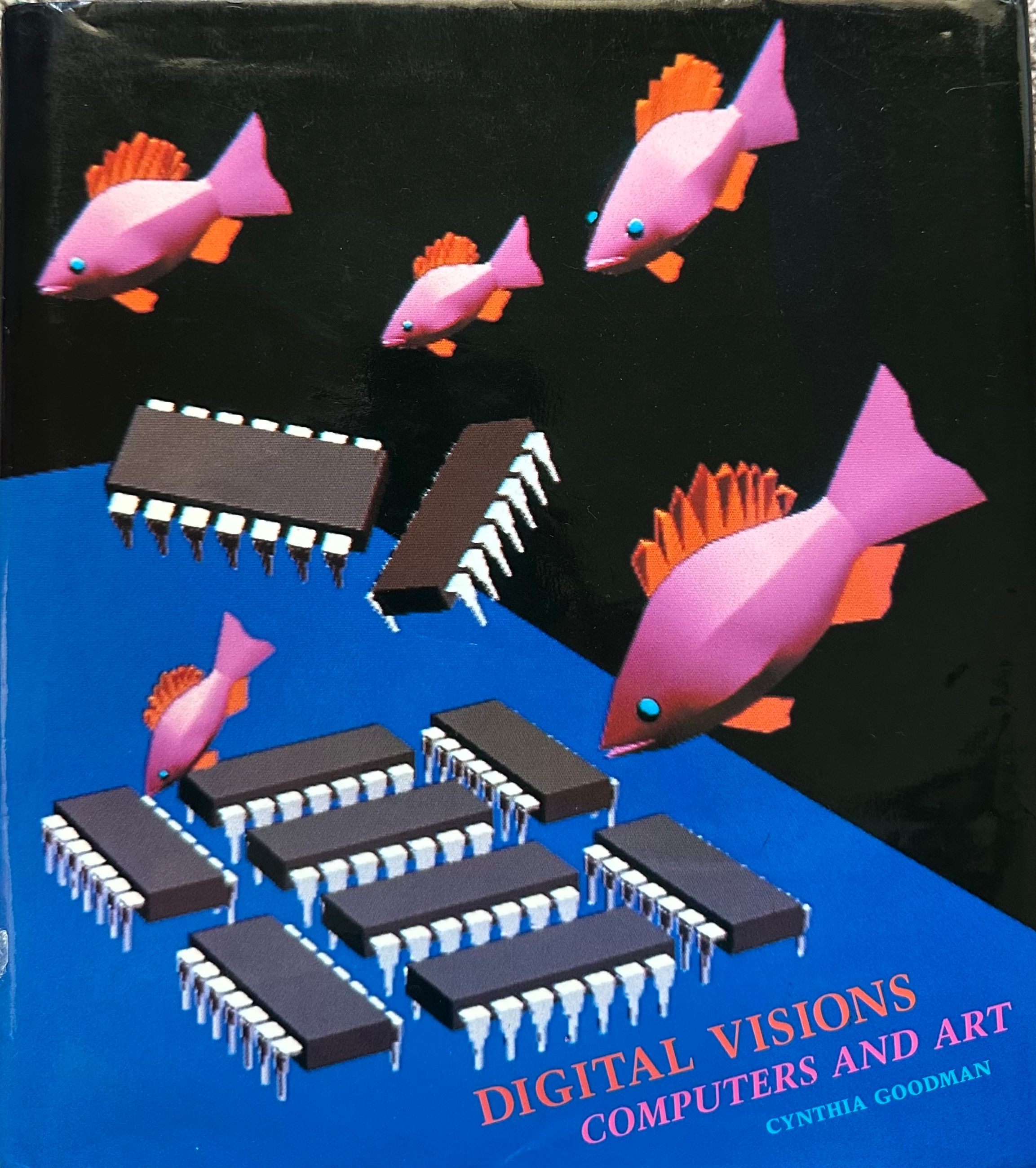
Cynthia Goodman, 1987
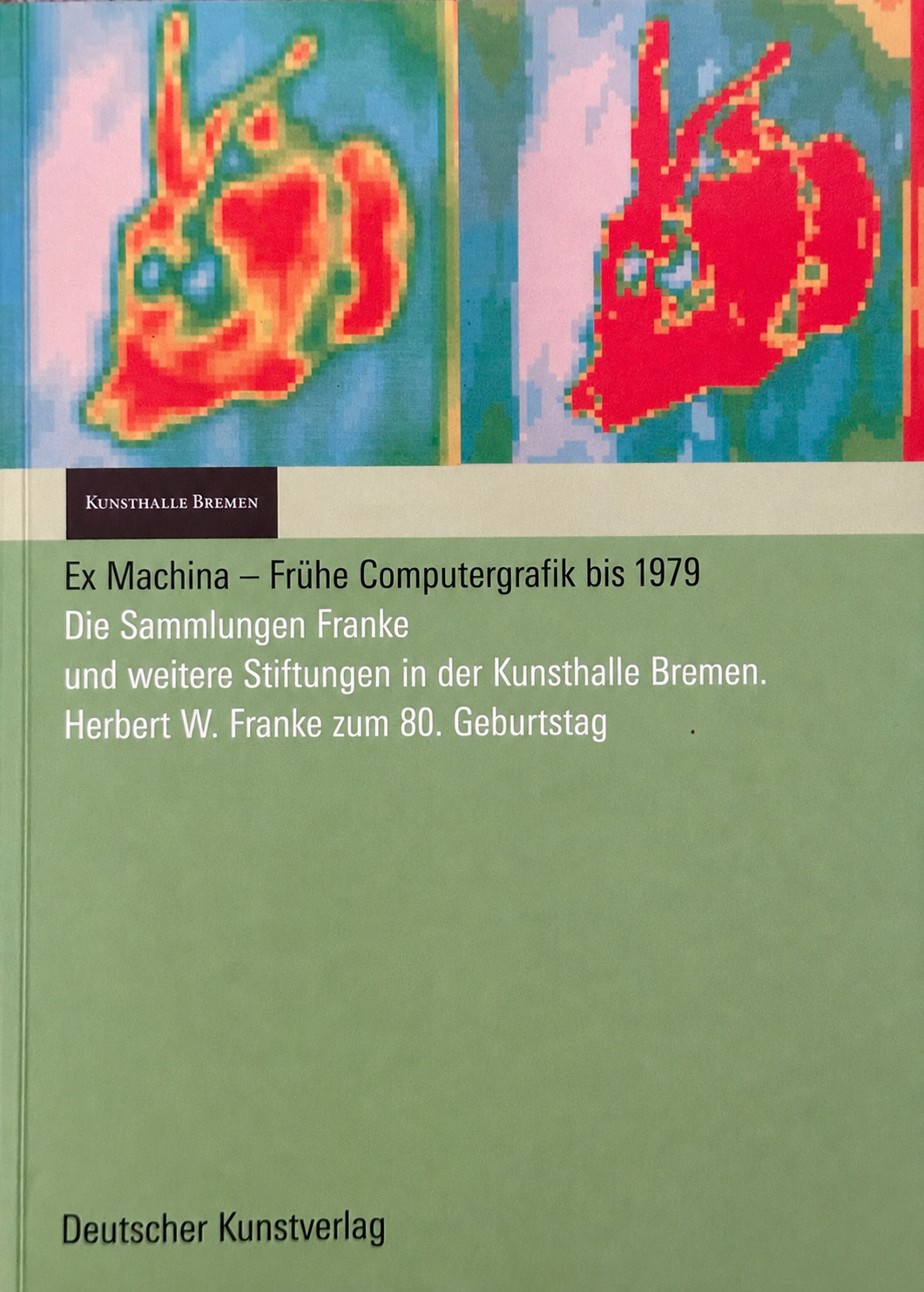
Wulf Herzogenrath and Barbara Nierhoff-Wielk, editors, 2007
Historical Context & Conceptual Framework
Cybernetic Serendipity took place during a transformative era defined by postwar technological optimism coinciding with the British government's embrace of the "white heat of technology" and rapid advances in mainframe computing. Curated by Reichardt with layout and catalogue design by Franciszka Themerson, the exhibition avoided making heroic claims about machines replacing human artists. Instead, it investigated possibilities—exploring how cybernetic feedback loops, algorithmic logic, and computational chance (serendipity) could expand the frontiers of artistic expression.
The exhibition was structured across three main vectors:
1. Interactive & Reactive Cybernetic Installations
2. Plotter Art & Algorithmic Image Generation
3. Algorithmic Sound, Film & Text
Enduring Legacy
Attracting over 45,000 to 60,000 visitors in London before traveling across the United States (including stops at the Corcoran Gallery in Washington, D.C. and the Exploratorium in San Francisco), Cybernetic Serendipity fundamentally shifted the public and academic perception of computers from bureaucratic calculating machines into fertile instruments of human imagination. It led directly to the founding of the Computer Arts Society (CAS) in London in 1968 and remains the historical benchmark for digital, interactive, and generative art history.