

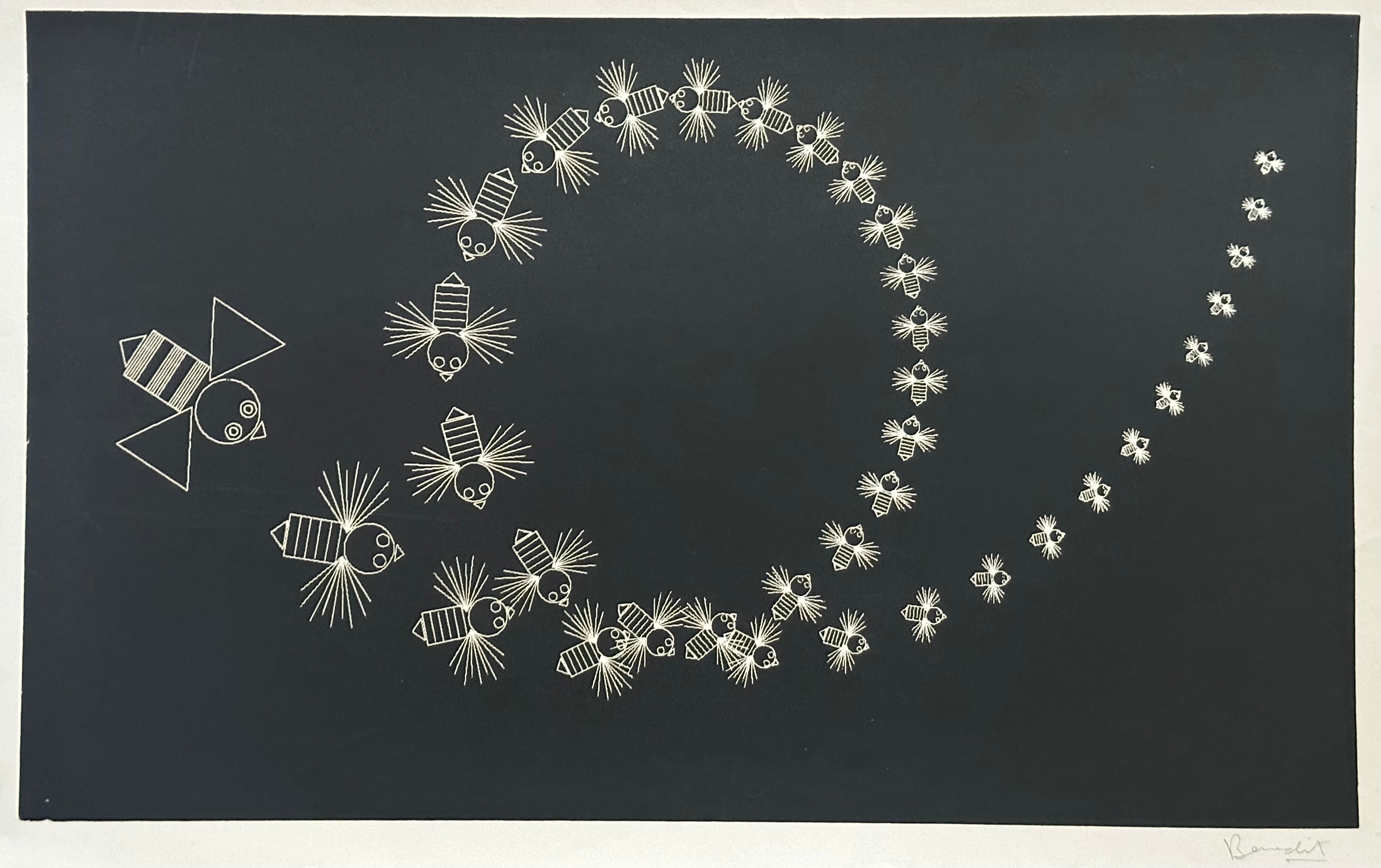
Repeated impressions of a single bee record successive positions along its mathematically calculated flight. Vuelo de una abeja (Flight of a Bee) is how Benedit identified the subject of this work in an archival 1970 film.
Provenance
from the estate of Miguel Ángel Vidal, cofounder of CAyC, Buenos Aires
Exhibitions
- 1969 – Arte y Cibernética, Galería Bonino, Buenos Aires. Benedit’s computer-assisted graphics were produced for and included in this project. The exhibition history of this particular physical impression has not been established.
- 1971 – Grupo Buenos Aires presentation, National Conference of the Association for Computing Machinery, Chicago. CAyC documentation records the presentation of computer-assisted works by Benedit and the other original Argentine participants; the exact impression shown is unconfirmed.
- 1974 – Le Musée Cybernétique, Musée d’art contemporain de Montréal. CAyC documentation again lists Benedit among the artists whose computer graphics were presented; the exact impression shown is unconfirmed.
References
- Arte y cibernética. Exhibition catalogue. Galería Bonino and Centro de Estudios de Arte y Comunicación, Buenos Aires, 1969.
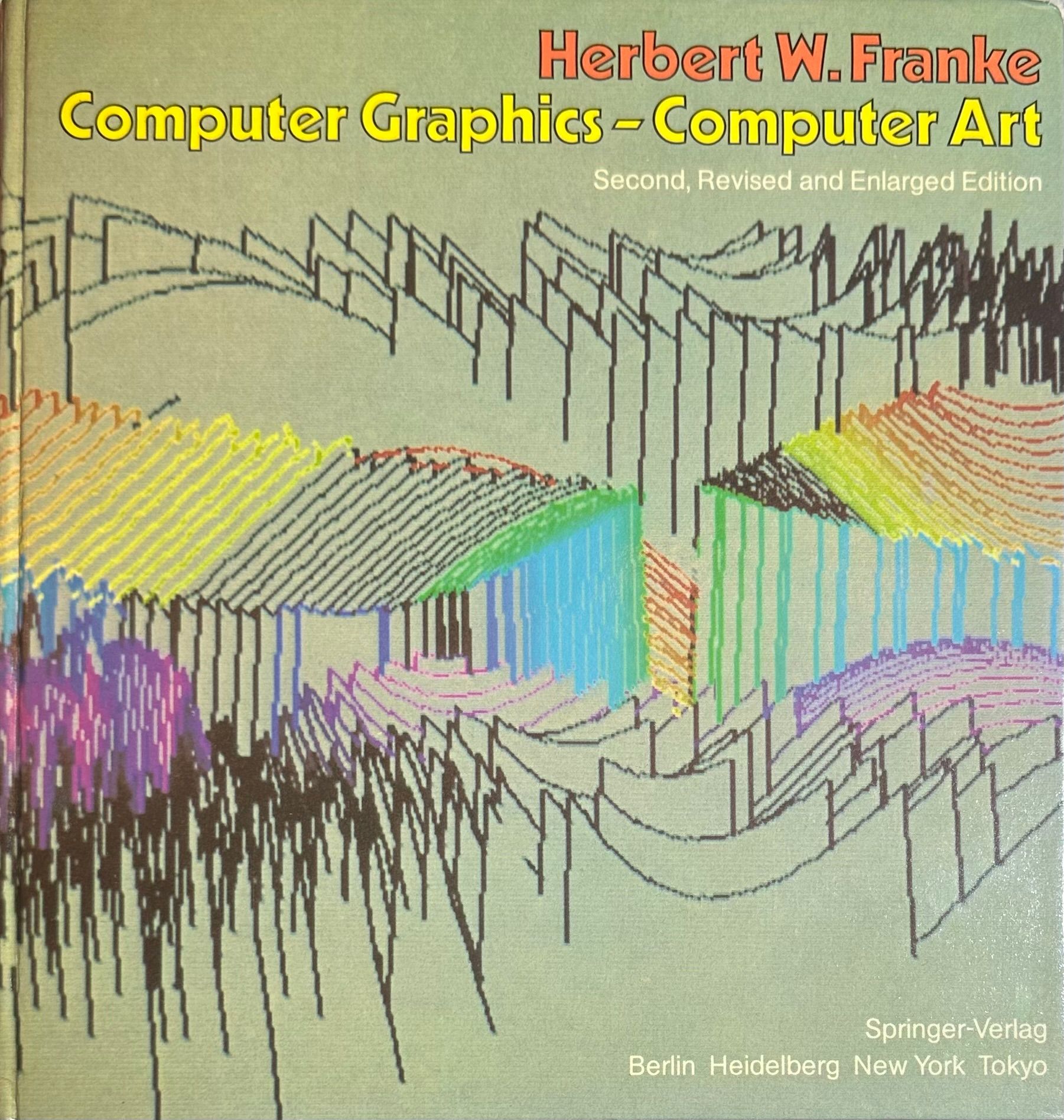
- Herbert W. Franke, Computer Graphics – Computer Art, second, revised and enlarged edition, Springer-Verlag, 1985, p. 115. Franke discusses CAyC’s collaboration between Argentine artists and computer specialists and identifies Benedit among the participating artists.
- Michael Bogan, “The Lost Computer Art of South America,” Ragnar Digital, 2026. Reproduces and discusses Benedit’s Untitled bee print as part of his 1969 computer work.
- Ragnar Digital, Untitled, Luis Fernando Benedit, 1969.
- ISLAA, Arte y Cibernética, c. 1970. Restored CAYC film, Spanish, approximately eight minutes.
- ICAA/MFAH, “Arte y cibernética: San Francisco–Londres–Buenos Aires,” CAYC gacetilla GT-23, 1970.
- ICAA/MFAH, “Grupo Buenos Aires en Chicago,” CAYC gacetilla GT-63, 1971.
- ICAA/MFAH, “Argentine Computer Graphics Montreal,” CAYC gacetilla GT-401, 1974.
- Tate Images: Untitled, P15470 - the same composition in Tate’s collection.
- V&A: Centro de Arte y Comunicación - institutional account of the ORT equipment and Argentine computer-art project.
- ICAA/MFAH: Arte y Cibernética. San Francisco–Londres–Buenos Aires -archival CAyC exhibition documentation.
- CAyC, Argentinos en Bordeaux, GT-330, December 17, 1973 - lists “Benedit Luis – Vuelo de una abeja.”
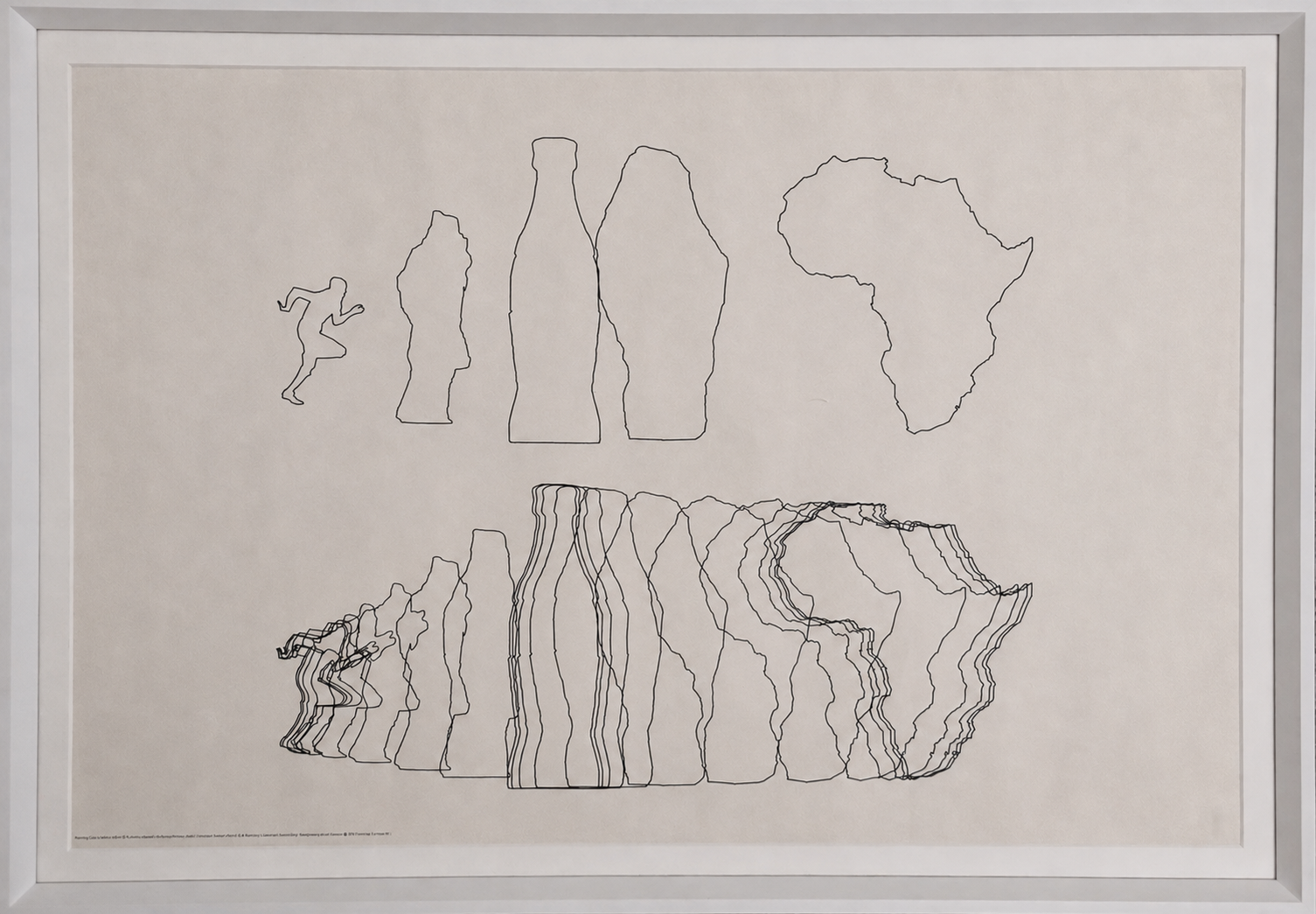
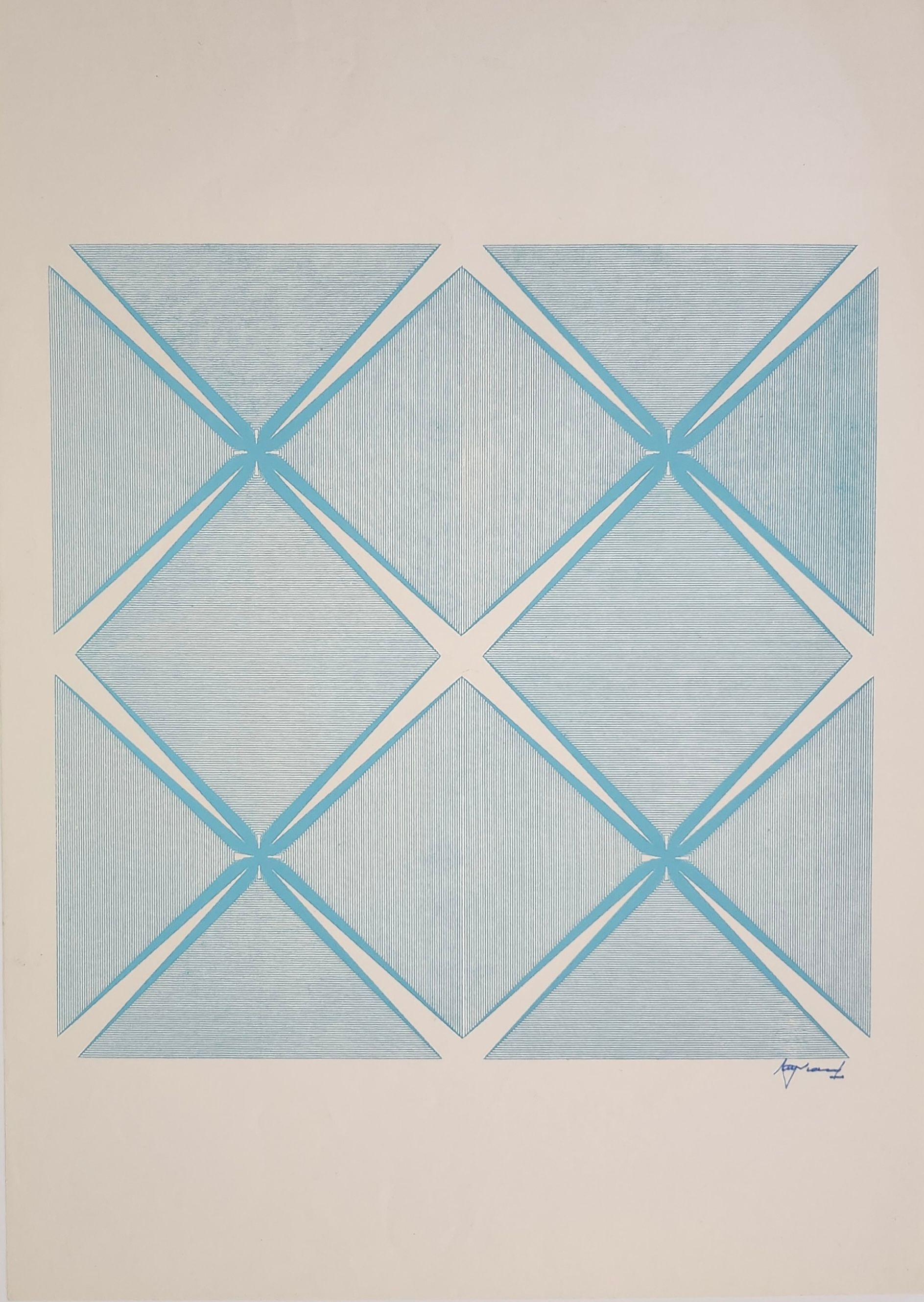
This 1969 print emerged from the experiments organized by Jorge Glusberg’s Centro de Arte y Comunicación (CAyC) in collaboration with the Computation Centre of the Escuelas Técnicas ORT. Beginning in 1969, invited Argentine artists worked with programmers, engineers and systems analysts to translate visual proposals into instructions that could be executed by an IBM 1130 computer and an IBM 1627 drum plotter. Participants included Luis Fernando Benedit, Miguel Ángel Vidal, Antonio Berni, Eduardo Mac Entyre, Ernesto Deira and others.
Benedit proposed the flight of a bee as a problem for computational representation. The repeated insects do not depict a swarm or honeycomb. Each represents a successive position of a single bee moving through space. Changes in the figure’s location, orientation and scale describe its trajectory over time, capturing movement into a static image.
In the archival film Arte y Cibernética, engineer Julio Guibourg explains that the artist’s proposal required close cooperation with a programmer. The problem was analyzed mathematically, equations corresponding to the bee’s motion were formulated, and those equations were translated into instructions for the computer on a stack of punch cards with Vuelo de una aveja (Flight of a Bee) written across their spines. The film shows the drum plotter drawing the bee repeatedly as it constructs the trajectory.
Benedit emphasized that computation made possible an image that would have been impractical to execute manually:
“The computer can draw in seconds what would have taken me months and would not have come out well.”
His observation identifies the computer as more than a labor-saving device. It enabled a type of representation that depended on calculation, repetition and precisely controlled variation. Benedit established the subject and conceptual problem; the technical team converted it into mathematical and computational form; and the plotter visualized the image.
An impression of the same composition is held in Tate’s permanent collection as Untitled, c. 1969, accession P15470. Tate records that impression as having been presented by the estate of Miguel Ángel Vidal and Ungallery, Buenos Aires, in 2020.
The work also anticipates Benedit’s subsequent investigations into animal behavior, artificial environments and systems of control. In Biotrón, presented at the 1970 Venice Biennale, four thousand living bees inhabited an artificial environment regulated by technological systems. In this computer-generated image, the animal is instead converted into information: its body becomes a repeated sign and its movement a mathematically described system. Both works locate biological life at the intersection of observation, technology and human intervention.