Artist · 1938–present
Frieder Nake
German
Stuttgart, Germany · Toronto, Canada · Vancouver, Canada · Bremen, Germany
Frieder Nake (b. 1938) is a foundational figure who helped establish programming as an artistic practice, starting with writing software for the Zuse Graphomat Z64 plotter in 1963, followed by exhibiting computer-generated drawings in Stuttgart in 1965 and at the Venice Biennale in 1970. His plotter works, critical writing, teaching and later interactive software connect the origins of computer art to contemporary generative art.
In the collection
1 work
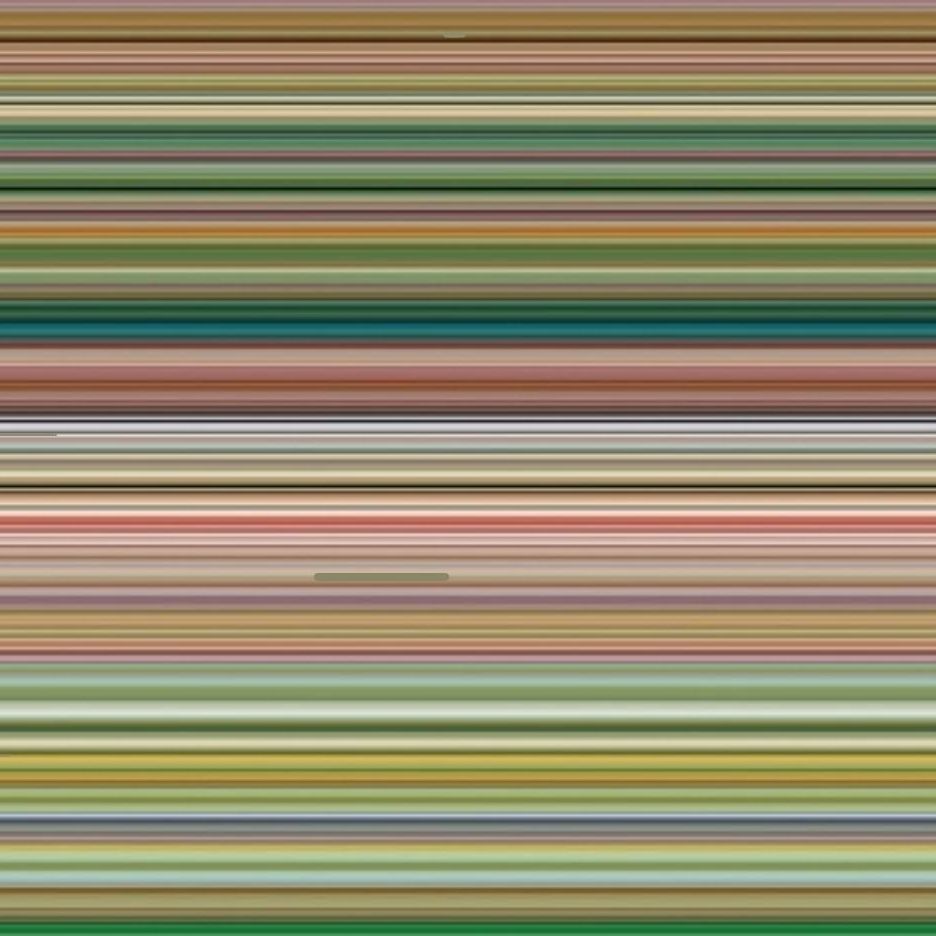
Frieder Nake (born Stuttgart, 1938) is a mathematician, computer scientist and one of the foundational figures of algorithmic art. His importance rests on three connected achievements: he developed software that turned mathematical instructions into drawings; brought those drawings into public exhibitions; and articulated the aesthetic and political questions raised when an artist describes a generative process instead of executing every mark. His career connects the 1960s mainframe and plotter era with 21st century interactive installations and continuously running software.
In November 1965, Nake exhibited with Georg Nees at Galerie Wendelin Niedlich in Stuttgart. Together with Nees’s February 1965 exhibition in Stuttgart and the presentation of A. Michael Noll and Béla Julesz at New York’s Howard Wise Gallery in April 1965, this belongs to the landmark public appearances of computer-generated art in that year. Nake, Nees and Noll are consequently often grouped as the “three Ns.”
Nake’s established a central principle of later generative art: authorship can reside in the design of a system and the selection of its outcomes as well as in the individual image. Programming did not eliminate aesthetic judgment; Nake continued to assess, retain and reject the drawings produced.
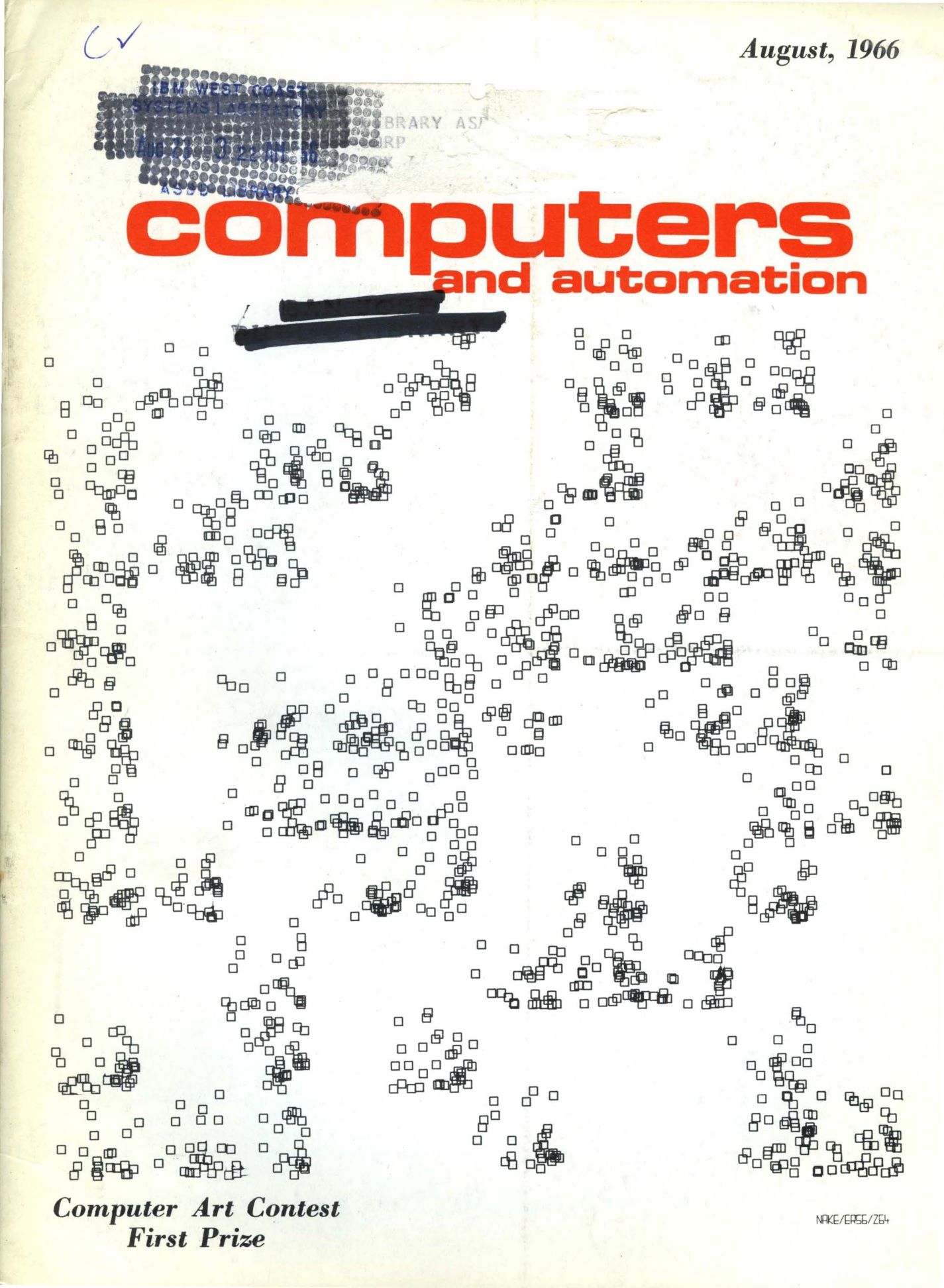
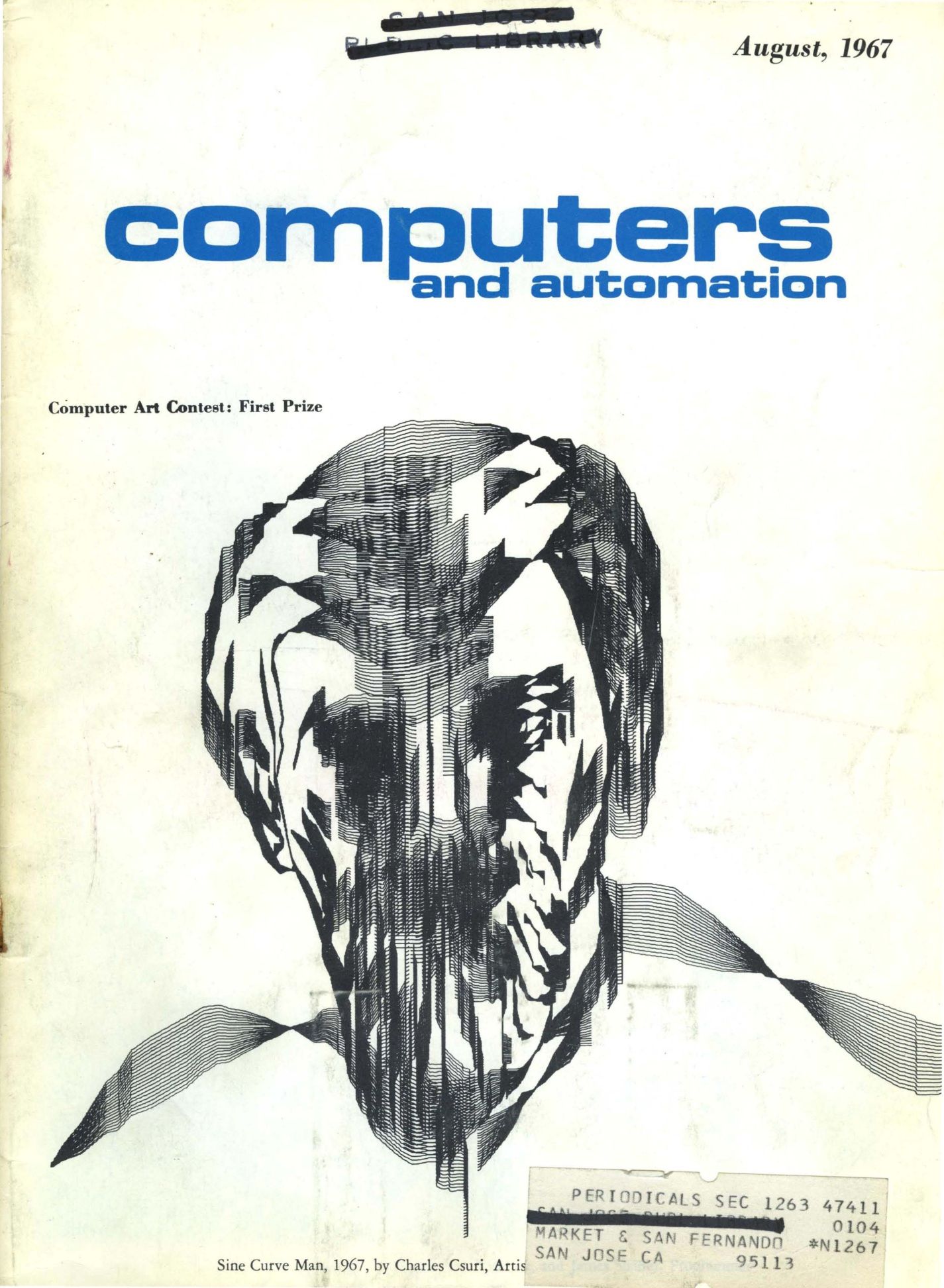
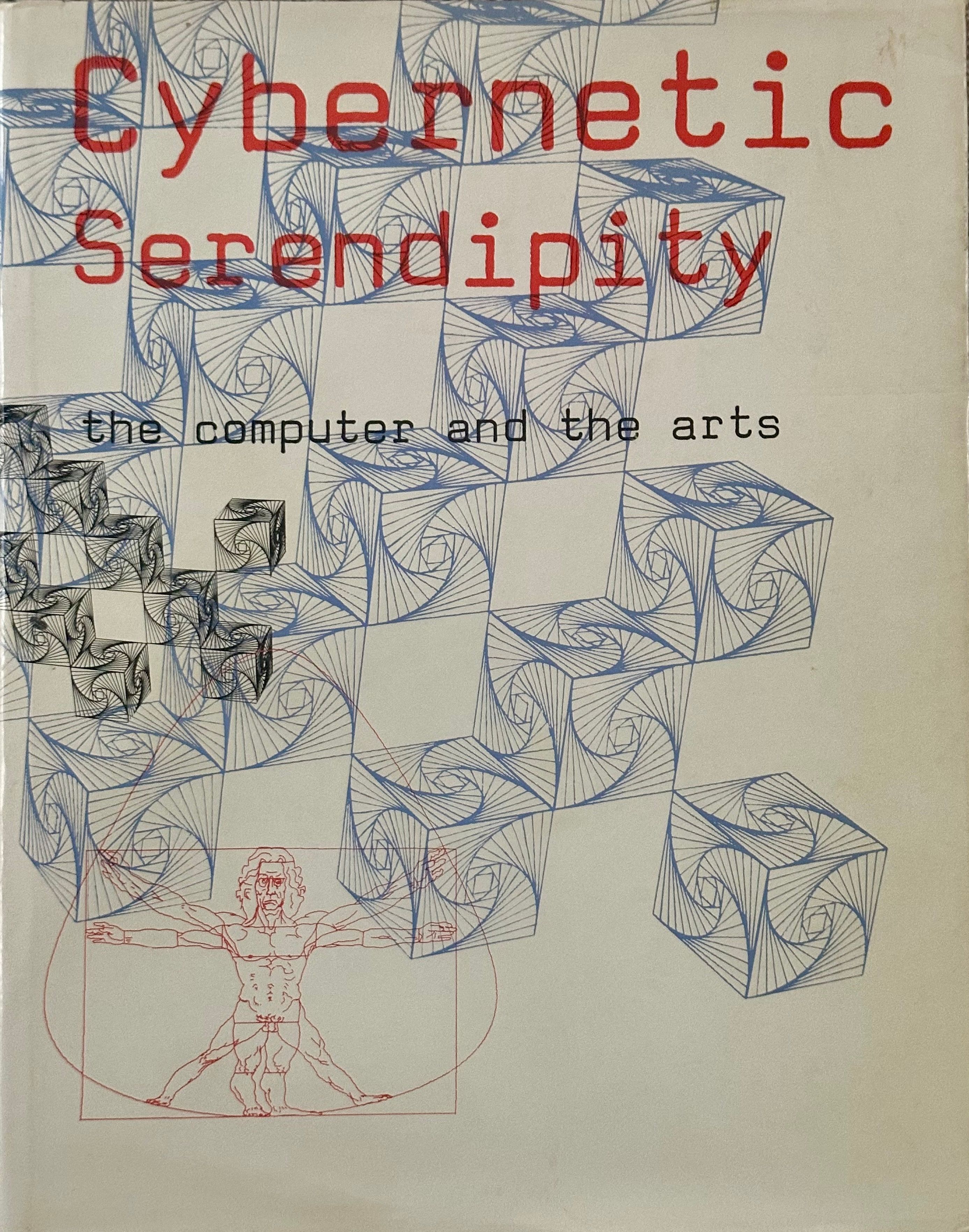
Nake’s work received contemporary recognition. He won first prize in the 1966 Computers and Automation art competition, whose cover and interior pages reproduce several of his drawings. He participated in Cybernetic Serendipity at London’s Institute of Contemporary Arts in 1968. His Matrix Multiplication among the works displayed in the 1970 Venice Biennale.
Nake was also a critic of the field he helped establish. In “There Should Be No Computer-Art,” published in the Computer Arts Society’s PAGE in October 1971, he questioned the production of computer art as another marketable fashion and insisted on the social responsibilities of those with access to computing. His withdrawal from making art was political and ethical, rather than a rejection of the computer’s expressive potential. In Franco’s later interview, he also recalls abandoning the hope that numerical information aesthetics could remove subjective judgment from art, and identifies a 1985 essay as a step toward his gradual return.
Teaching, writing and historical research remained central. Nake joined the University of Bremen in 1972 and worked on computer graphics, interactive systems, semiotics and the social implications of computing. He co-founded compArt in 1999, helping preserve and study early digital art.
Exhibitions
- 1965 – Computer-Grafik, with Georg Nees, Galerie Wendelin Niedlich, Stuttgart, 5–26 November.
- 1968 – Cybernetic Serendipity, Institute of Contemporary Arts, London.
- 1970 – Research and Planning, 35th Venice Biennale; Matrix Multiplication documented in Francesca Franco’s study.
- 2004–05 – Die präzisen Vergnügen, Kunsthalle Bremen, 9 November 2004–16 January 2005.
- 2005 – Precise Pleasures / Die präzisen Vergnügen, ZKM, Karlsruhe, 19 February–10 April.
- 2007 – Ex Machina: Early Computer Graphics up to 1979, Kunsthalle Bremen.
- 2018 – Chance and Control: Art in the Age of Computers, Victoria and Albert Museum, London.
- 2022 – Liebe Maschine, male mir / Dear Machine, Paint for Me, Kate Vass Galerie and elementum.art, The Circle, Zürich; series presentation of Homage to Gerhard Richter.
- 2025 – 1965 The Beginning: Georg Nees, Frieder Nake, DAM Projects, Berlin, 13 September–1 November.
In the library
12 items