

Exhibition catalogue
20th Century Computer Art: Beginnings and Developments
2006A Japanese exhibition catalogue connecting the pioneers of computer art with later algorithmic practice. Artists’ accounts of their ideas and methods accompany extensive illustrations, with substantial documentation of Hiroshi Kawano and CTG alongside European and American pioneers.
- Author / editor
- Association for Algorithmic Art (芸術アルゴリズム研究会) and Tama Art University, editors
- Publisher
- Tama Art University Museum
Tama, Tokyo, Japan - Format
- Illustrated softcover exhibition catalogue; sewn binding
- Pages
- 191
- Language
- Japanese, with English titles and captions
Related in the collection
Computer Technique Group (CTG), 1968
Cover designs by Shigeru Watanabe, Haruki Tsuchiya, Kōji Fujino and Masao Kōmura, 1967–1971; General Index 1974
Jasia Reichardt, editor. Franciszka Themerson, design & layout., 1968
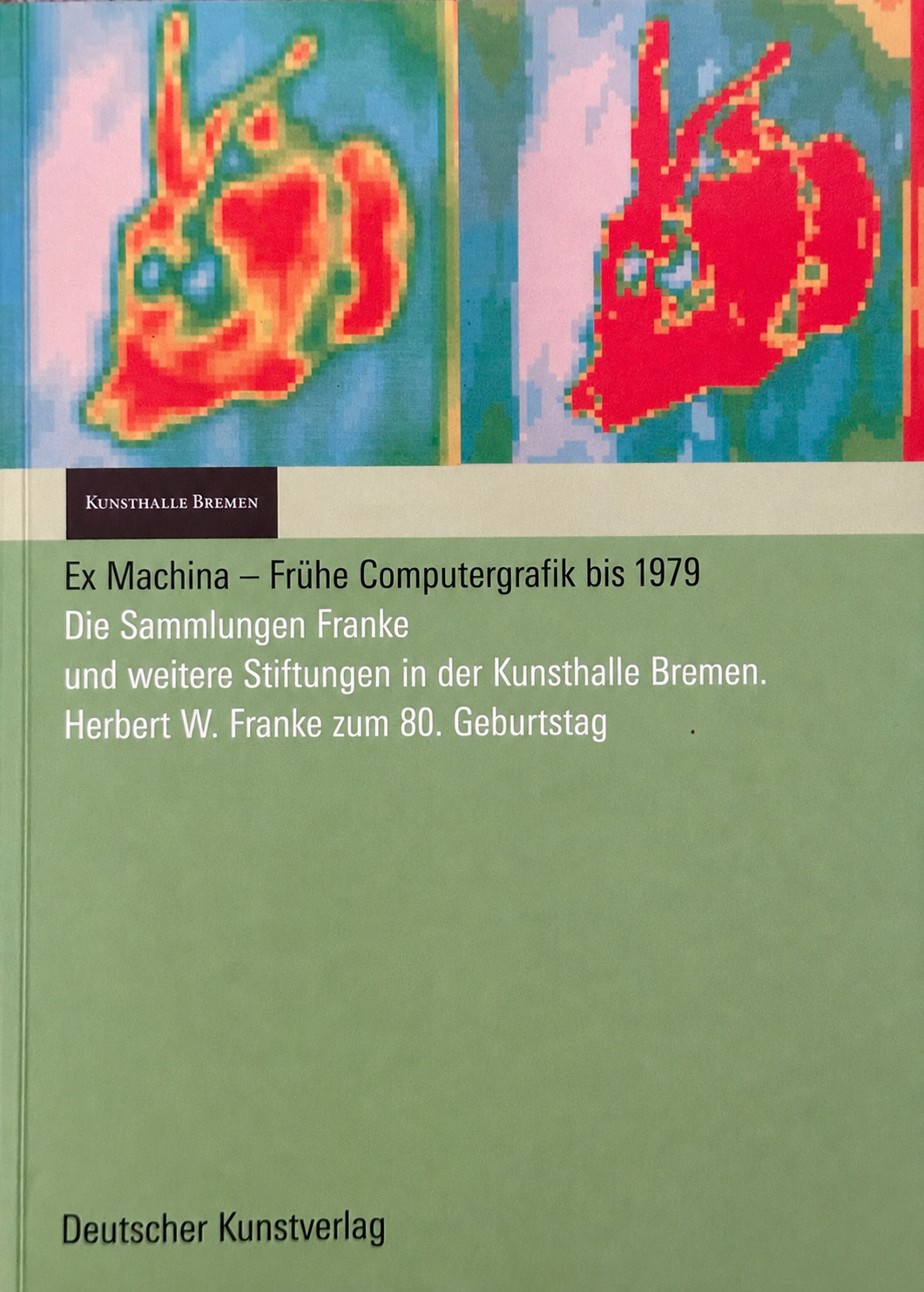
Wulf Herzogenrath and Barbara Nierhoff-Wielk, editors, 2007
Published for the exhibition at Tama Art University Museum, 3 November–17 December 2006, this catalogue brings the early history of computer art into conversation with algorithmic practice at the beginning of the twenty-first century. Its subtitle, The Work and Thought of Pioneers and Contemporary Practitioners of Algorithmic Art, describes its distinctive emphasis: images are accompanied by accounts of the ideas, rules and technical processes through which they were made.
The volume places European and American pioneers, including Georg Nees, Herbert W. Franke, Frieder Nake, A. Michael Noll, Harold Cohen, Manfred Mohr and Vera Molnár, alongside a substantial Japanese history. Hiroshi Kawano and Computer Technique Group (CTG) appear within a broader field of artists, designers, researchers and educators. The resulting perspective expands histories organized primarily around European exhibitions and American laboratories, while showing the international circulation of information aesthetics and computational methods.
Kawano’s contribution is especially valuable for its explanation of computer art as an experiment in scientific aesthetics. His account connects information theory, Markov chains and generative grammar with specific images and methods. The illustrated sequence includes black-and-white and five-color Markov-chain works dated 1964, Simulated Color Mosaic and an information relief dated 1969, and Red Tree, dated 1971. These pages make the relationship between a mathematical model, a computer’s output and its eventual material realization unusually clear.
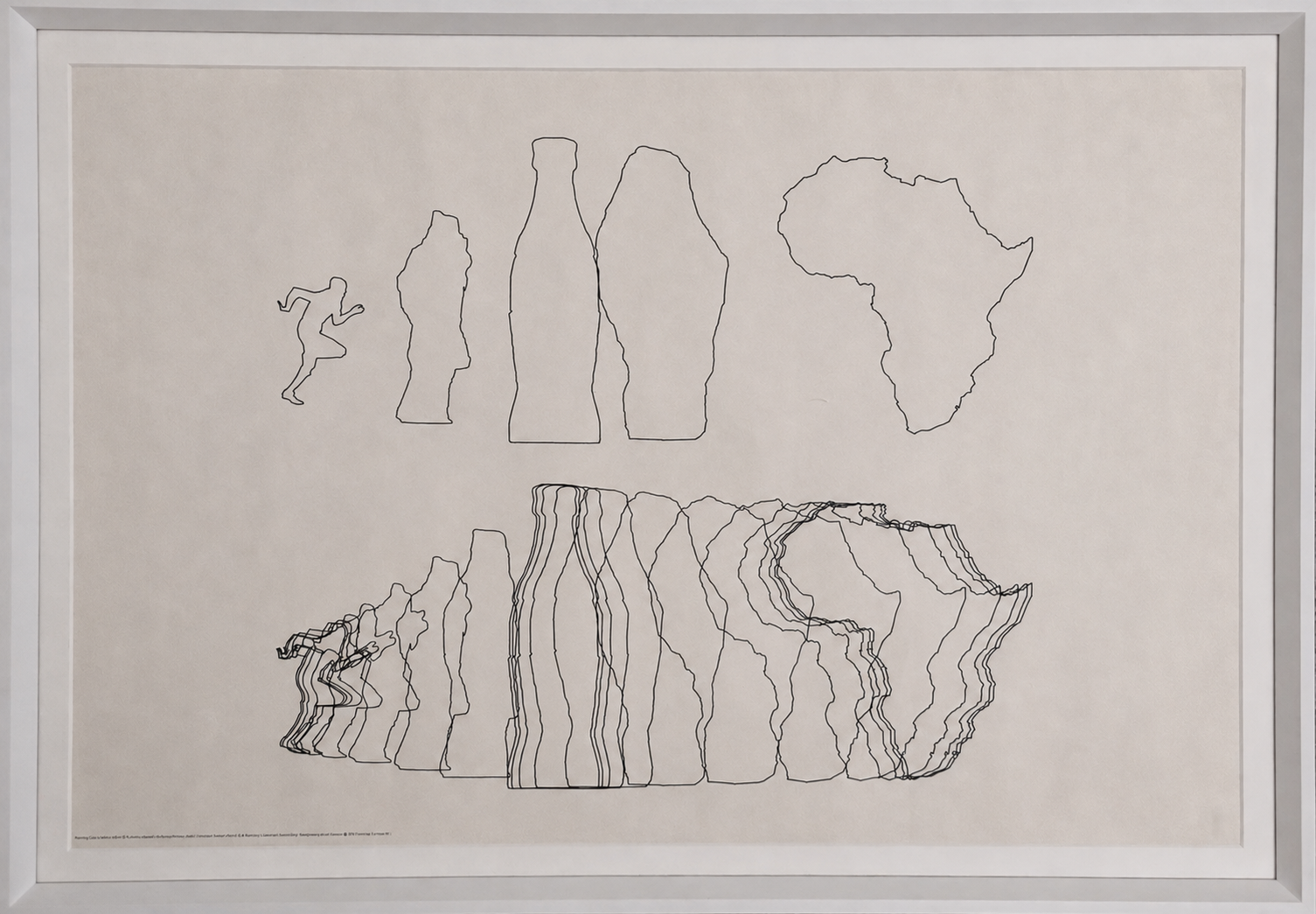
The CTG section, credited to Kazufumi Oizumi, explains data transformation, topological transformation and computer-generated patterns, together with the group’s Automatic Painting Machine No. 1. It reproduces the Computer Design Series posters, Running Cola is Africa, transformations of Kennedy and Sharaku, and other characteristic works. Its attention to programming, plotter output, printed multiples and interactive painting helps situate CTG across art, graphic design and experimental media.
The catalogue also includes essays by Kawano, Koji Kusabuka and Akihiro Kubota, historical theoretical texts, Oizumi’s account of CTG’s activities from 1966 to 1969, a chronology and artist biographies. Read together, these materials present algorithmic art as a sustained investigation of how images are constructed, linking pioneering experiments with later artistic practice and education.
Japanese title: 20世紀コンピュータ・アートの軌跡と展望 — 現代アルゴリズム・アートの先駆者・現代作家の作品・思想.
References and external links
Tama Art University Museum: exhibition archive
CiNii Books: bibliographic record (BA79133624)