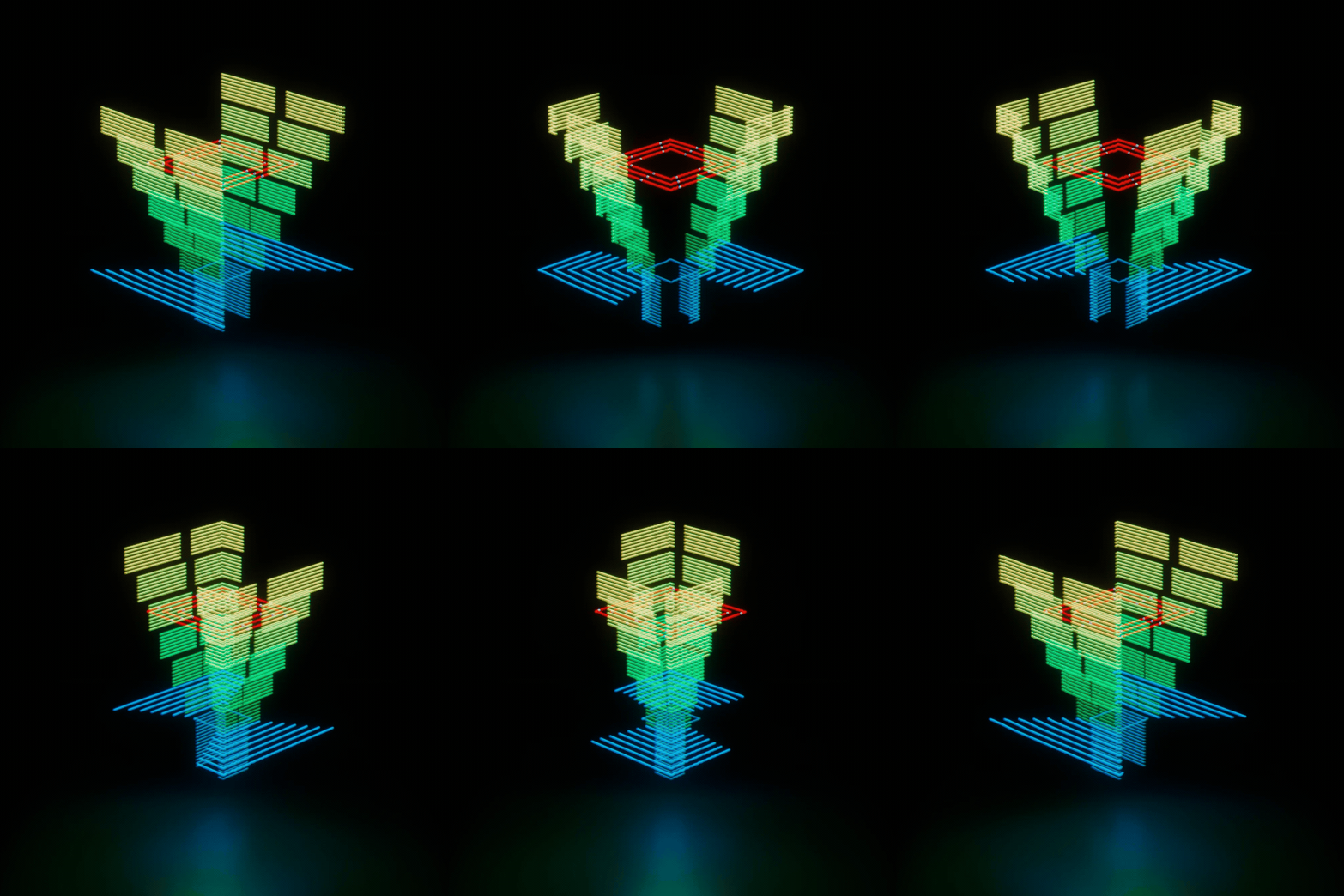
Andreas Gysin and Sidi Vanetti used a plotter to move a column of LEDs in front of an open camera shutter.
Provenance
Acquired from Andreas Gysin, 2026.
Exhibitions
2024 · Heterotopia, Paris Photo, Grand Palais, Paris, 7–10 November. Nguyen Wahed presented the original Link series in booth F03.
2025 · Bare Systems, MUD Gallery, Shanghai, 13 September–18 October. Curated by Mimi Nguyen. The artists’ installation photographs identify Link 2 works #3, #4, #5, #11 and #16.
References
Gysin–Vanetti, Link 2 (2025). The artists’ account of the second series, with hardware studies, a color test and installation photographs from MUD Gallery, Shanghai.
Gysin–Vanetti, Link (2023–25). The project’s origins in a 2012 festival proposal, the camera and plotter setup, and a film showing how one frame is made.
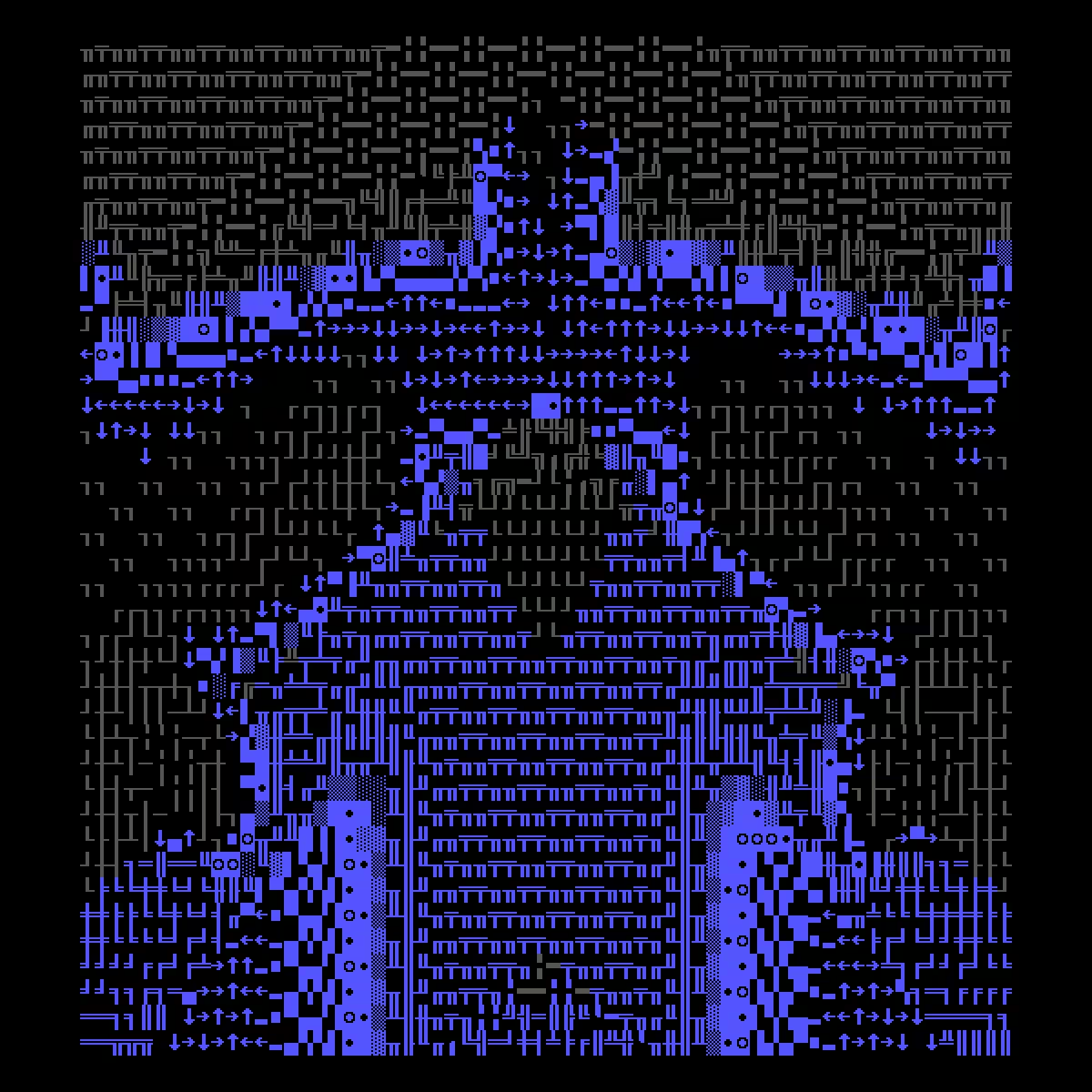


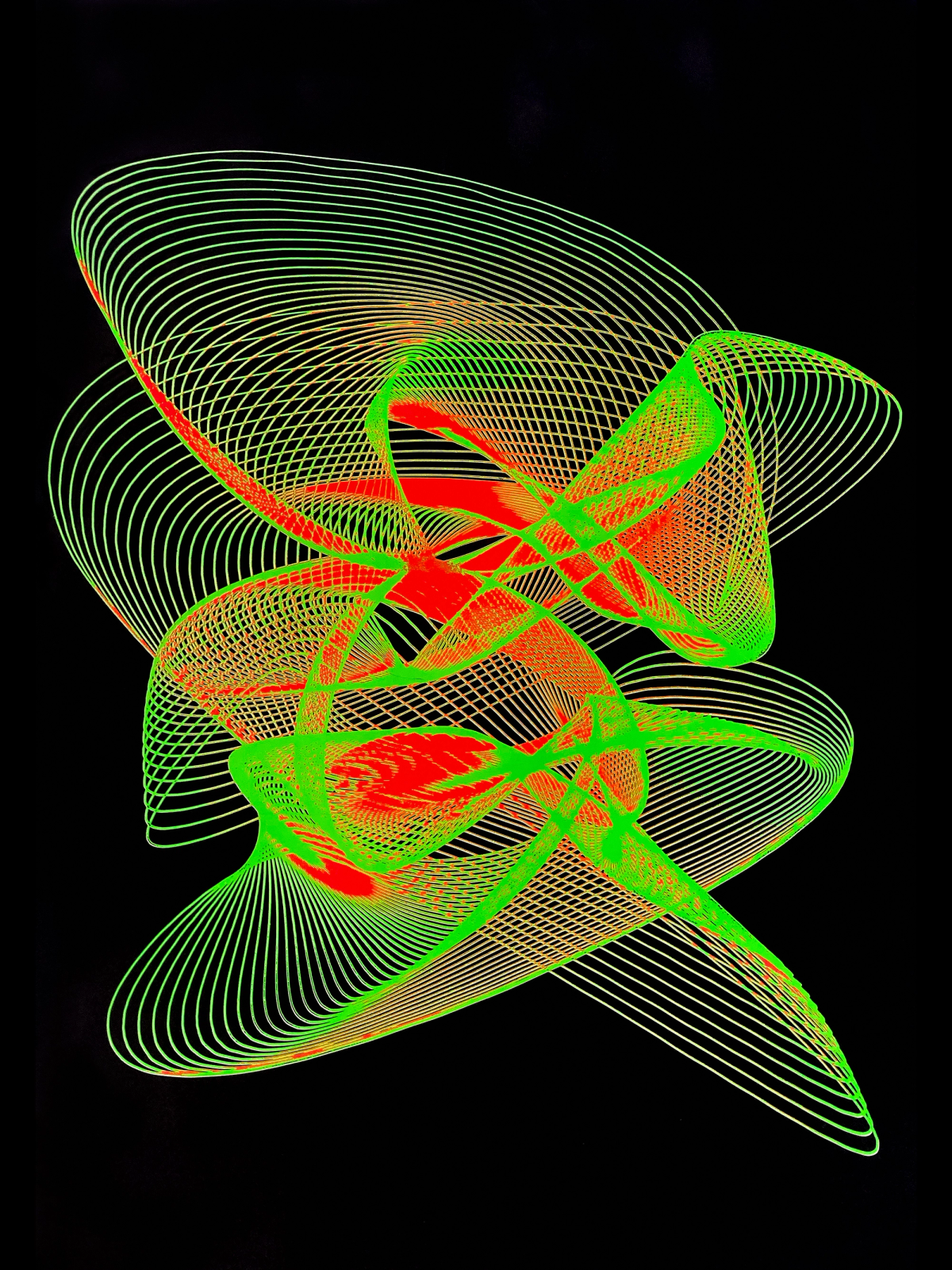
The two Swiss artists (both born in 1975) built a dark enclosure for their plotter and camera. The plotter moves the upright LED array across a horizontal plane while software changes the color and brightness of individual lights. With the shutter open, each moving LED draws a line in the photograph. For the next frame, the plotter traces a new path. A pool of blue-green light beneath the figure records the reflection on the floor of the enclosure.
For Link 2, the artists tested arrays with more closely spaced LEDs than in their earlier Link series. In #9, bands of parallel light read as flat planes. Seen edge-on, a band narrows to a line. A moment later, the same band opens out, and the red square appears suspended between two upright fans. The artists’ photograph of the old and new arrays and film of the plotter in motion show the apparatus behind this change of view.
The collection’s Andromeda by Heinrich Heidersberger offers an earlier example of drawing with moving light. Heidersberger’s rhythmograph recorded mechanically guided light as a still image. Gysin and Vanetti repeat the exposure with a changed path to give a light drawing duration.
This work bridges many decades of electronic / computer art, from oscilloscope photography of the 1950s, through the plotters of the 1960s, to the algorithmic generative art of the 2010s.
The camera plays a similar role in 1950s oscilloscope photography. In Hy Hirsh’s Untitled [Color Abstraction] and Ben Laposky’s Oscillon 4, an electron beam traced patterns on a phosphor screen and a camera recorded the light. Gysin and Vanetti move the light source itself using a plotter. Their digital program directs the plotter and the LEDs, while the open shutter gathers light along each physical path.